Total Pageviews

Friday, June 24, 2016

Kalgoorlieite: A new Mineral Discovered in Western Australia

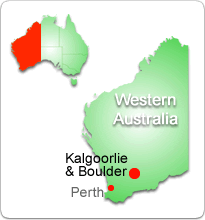
     A new mineral has been discovered at Australia's Kalgoorlie’s Super Pit and is named ‘kalgoorlieite’ after the type locality of Kalgoorlie.


      The mineral, with chemical formula As^2Te^3, was discovered by Dr. Kirsten Rempel, from Australia's Curtin University’s Department of Applied Geology. She first identified the microscopic, silver colored particle in January, 2016, after examining ore samples at Curtin’s Kalgoorlie campus museum.


      “This mineral, while only seen in very small grains so far, can provide important information about the genesis of the giant Golden Mile gold deposit, which is widely contested,” she added.


     The sample was taken from the former Associated Gold Mines which was eventually consolidated into the Kalgoorlie Super Pit which is operated by Kalgoorlie Consolidated Gold Mines. For years it stayed in the museum, simply described as ‘gold ore showing tellurides’.


        Kalgoorlieite is the fourth oxygen-free As-Te mineral after benleonardite, debattistiite, and törnroosite. Its mineral class is monoclinic. [A crystal system is described by three vectors. In the monoclinic system, the crystal is described by vectors of unequal lengths, as in the orthorhombic system. They form a rectangular prism with a parallelogram as its base. Hence two vectors are perpendicular, while the third vector meets the other two at an angle other than 90°, seen below in orthoclase.] 


     Rempel told Australian Mining it took approximately three months to have the mineral approved by the International Mineralogical Association (IMA), with the measurements and tests conducted in London. She said the IMA receives over 100 mineral proposals each year, and that most of the newly discovered minerals are complex and have minor differences to existing ones.


     “It is rare to find a mineral with the simplicity of kalgoorlieite these days.” She added that kalgoorlieite was a telluride mineral that is chemically related to the silver and gold telluride ores in the super pit.

     “Kalgoorlieite contains only trace amounts of gold and silver, but it is closely associated with gold-silver telluride minerals such as sylvanite,” she said, adding that it may be possible to find other new minerals in the sample.


      “I think it’s actually possible because telluride is not very well studied and it is easily overlooked. But there are already quite a number of telluride found.” She added that telluride is important for gold recovery, with 20 % of gold from the mine coming from gold telluride (also known as calaverite).

Crystals have class...and so do PEOTS commenters. Are you happier knowing there's a new mineral in town?
Steph

Wednesday, June 15, 2016

Larger Super-Eruptions at Yellowstone National Park 8 to 12 Million Years Ago

    A smaller number of giant super-eruptions between 8 and 12 million years ago that could be larger than the colossal eruptions known to have taken place at Yellowstone have been identified in the United States through research led by the University of Leicester.


     The international research team suggests that while the number of volcanic eruptions thought to have originated from the central Snake River Plain in Idaho, USA, is less than previously believed, the 12 recorded giant eruptions were likely 'significantly larger' than research has previously suggested.


     Dr. Tom Knott, Professor Mike Branney and Dr. Marc Reichow, from the University of Leicester's Department of Geology's Volcanology Group, conducted the research with a team of international collaborators from the U. of California, Santa Cruz, the U. of Copenhagen, Denmark and Idaho State University.

     "Using a multi-technique approach, including whole-rock and mineral chemistries, palaeomagnetic data, and radio-isotopic dates, the team has been able to 'fingerprint' individual eruption deposits and correlate these over vast regions (thousands of square kilometers)."


    In establishing widespread correlations, the team drastically reduced the number of eruptions previously thought to have originated from the central Snake River Plain by more than half.


     "The researchers have reported that one of the super-eruptions from the Yellowstone hotspot-track, defined as the Castleford Crossing eruption, occurred about 8.1 million years ago and estimate the eruption volume to have exceeded 1,900 cubic kilometers. 

     "The single volcanic sheet covers an area over 14,000 square kilometers in southern Idaho, and is more than 1.3 kilometers thick in the caldera of the super-volcano."


     "This is just one of 12 giant eruptions reported from the area by the Leicester researchers who show that intense hotspot magmatism caused major crustal subsidence, forming the 100 kilometer-wide Snake River Basin. The team also demonstrates that these eruptions were in fact significantly larger than previously thought and may rival those better known at Yellowstone."

     Dr. Knott said "While it is well-known that Yellowstone has erupted catastrophically in recent times perhaps less widely appreciated is that these were just the latest in a protracted history of numerous catastrophic super-eruptions that have burned a track along the Snake River eastwards from Oregon to Yellowstone from 16 million years ago to present.


    "The size and magnitude of this newly defined eruption is as large, if not larger, than better known eruptions at Yellowstone, and it is just the first in an emerging record of newly discovered super-eruptions during a period of intense magmatic activity between 8 and 12 million years ago."

Ever been to the Snake River Plain or Yellowstone? Ash me no questions. . .
Steph

Tuesday, June 7, 2016

Finishing Blows: Not Muhammad Ali's but Antarctica's Larsen B Ice Shelf

     "The biggest ice shelf collapse on record was set in motion years earlier than previously thought, new research reveals."

     "Analyzing declassified images from spy satellites, researchers discovered that the downhill flow of ice on Antarctica’s Larsen B ice shelf was already accelerating as early as the 1960s and ’70s. By the late 1980s, the average ice velocity at the front of the shelf was around 20 percent faster than in the preceding decades, the researchers report in a paper to be published in Geophysical Research Letters."


     "Rising temperatures since the 1950s probably quickened the ice flow, which in turn put more strain on the ice and further weakened the shelf, says study coauthor Hongxing Liu, a geographer at the University of Cincinnati. Previous work had suggested that the ice shelf’s downward slide began only a few years before a Rhode Island-sized region of ice disintegrated into thousands of icebergs in 2002."


     "The new data will help scientists more confidently predict how Antarctic ice will fare in the coming decades, says Penn State glaciologist Richard Alley, who was not involved in the work. The early response of Larsen B to warming “is consistent with this ice shelf system being sensitive, and gives a target for future modeling studies to learn how sensitive, and for what reasons,” he says."

     "Ice shelves such as Larsen B line Antarctica’s coast and slow the flow of the continent’s glaciers and ice sheets into the sea. Rising temperatures are shrinking Antarctica’s ice, with several ice shelves on track to disappear completely within 100 years.Tracking the long-term decline of ice shelves is tricky, though. Scientific satellite images are sparse prior to the 1990s and next to nonexistent before the 1980s."


     Liu and others turned to another group that peered at Antarctica, a U.S. intelligence agency called the National Reconnaissance Office. In 1963, the agency photographed the continent as part of an intelligence-gathering mission. While these images were declassified in 1995, the photos were too distorted by effects such as the camera used and Earth’s curvature to use for ice flow measurements.  


     "Making the photographs usable required identifying stationary landmarks for reference, a difficult task on a continent covered with shifting white ice. Comparing the spy photos with later scientific images, Liu and colleagues identified 44 potential landmarks. Then, using the locations as anchor points, the researchers unwarped the images. Along with additional satellite images taken in 1979 and the 1980s, the modified images allowed the researchers to track Larsen B’s ice flow over time."


     "The ice on Larsen B’s front flowed at around 400 meters per year on average between 1963 and 1986, calculations using images from those years indicate. From 1986 to 1988, the average was 490 meters per year. That speed boost suggests that the ice flow accelerated between the 1963 to 1986 satellite images. Several glaciers that feed into Larsen B underwent similar accelerations, the researchers found."


     Larsen B’s early acceleration hints that the ice shelf was already weakening well before the 1990s, says Ted Scambos, a polar scientist at the National Snow and Ice Data Center in Boulder, Colorado, USA, who was not involved in the study. 

     Previous studies suggested that balmy surface temperatures caused Larsen B’s demise by forming meltwater pools 


on top of the ice shelf that forced open cracks in the ice. The new satellite data suggest that this fracturing was a finishing blow*


 following long-term weakening by forces such as relatively warm seawater eroding the ice shelf’s underside, Scambos said.

      I wonder what else is to be revealed in older aerial photographs and Landsat images of Antarctica and other areas. . .

Unwarpedly, ;-)
Steph

*My dad was such a Muhammad Ali fan and I wanted to pay homage to the man; Dad and Mom were in Atlanta in 1996 for the Olympics. It was a very special opening ceremony. . .


Wednesday, June 1, 2016

Check out that Jabot: Praying Mantis Named After Ruth Bader Ginsburg


     "For the first time, scientists have used the genitals of female praying mantises to formally distinguish one species from another. And using this novel technique, they've identified a previously unknown creature: Ilomantis ginsburgae. 


     The new mantis is named in honor of Ruth Bader Ginsburg, associate justice of the Supreme Court of the United States, for her efforts toward achieving gender equality and her love of the jabot – otherwise known as 'that neck thingy.'"


     "The researchers behind the new species say that its neck plate resembles Ginsburg's favorite neckwear, but bear in mind that scientists have compared the golden butt hairs of a fly to BeyoncĂ©'s rear end and the mouth of a fossilized ancient swamp pig to Mick Jagger's luscious lips. Point being: If you want to honor your favorite celebrity by naming a new species after them (which, by the way, is totally allowed, scientifically speaking) you can probably come up with some physical "similarity" between the two to strengthen your case and keep your co-authors from arguing with you. Ergo, jabot."


     "Ilomantis ginsburgae isn't particularly noteworthy, in the realm of praying mantises. The species was identified using a specimen collected in 1967 in Madagascar. Like other leaf-dwelling praying mantises, the species is green, with a flattened body, conical eyes and broad wings that look like veiny leaves."


      "But its identification was a little more special – because the researchers relied on its genitals."

       “As a feminist biologist, I often questioned why female specimens weren’t used to diagnose most species," Sydney Brannoch, a Case Western Reserve University PhD candidate, said in a statement. Along with Gavin Svenson, who oversees her research at the Cleveland Museum of Natural History, Brannoch recently published research on this technique in Insect Systematics & Evolution. They studied 30 female specimens from different museum collections, noting distinguishing genital characteristics and using them to distinguish species, then compared the results of their technique to more traditional methods."


     "This research establishes the validity of using female specimens in the classification of praying mantises. It is my hope that our work not only sets a precedent in taxonomy but also underscores the need for scientists to investigate and equally consider both sexes in other scientific investigations," Brannoch added."

     "This adds to the working toolkit that researchers can use to identify the insects, which will allow them to more accurately distinguish one species from another. And it makes it easier for species to be identified and categorized into families based on female insects alone."

What would you name a new insect you just discovered?
Steph

Thursday, May 26, 2016

The Cat is Big and Smart: A Second Box for Schrödinger's Cat?

      "Schrödinger's cat is a well-known paradox that applies the concept of superposition in quantum physics to objects encountered in everyday life. The idea is that a cat is placed in a sealed box with a radioactive source and a poison that will be triggered if an atom of the radioactive substance decays. Quantum physics suggests that the cat is both alive and dead (a superposition of states), until someone opens the box and, in doing so, changes the quantum state."


      "This hypothetical experiment, envisioned by one of the founding fathers of quantum mechanics in 1935, has found vivid analogies in laboratories in recent years. Scientists can now place a wave-packet of light composed of hundreds of particles simultaneously in two distinctly different states. Each state corresponds to an ordinary (classical) form of light abundant in nature."


     "A team of Yale scientists created a more exotic type of Schrödinger's cat-like state that has been proposed for experiments for more than 20 years. This cat lives or dies in two boxes at once, which is a marriage of the idea of Schrödinger's cat and another central concept of quantum physics: entanglement. Entanglement allows a local observation to change the state of a distant object instantaneously. Einstein once called it "spooky action at a distance," and in this case it allows a cat state to be distributed in different spatial modes."


     "The Yale team built a device consisting of two, 3D microwave cavities and an additional monitoring port -- all connected by a superconducting, artificial atom. The "cat" is made of confined microwave light in both cavities."


     "This cat is big and smart. It doesn't stay in one box because the quantum state is shared between the two cavities and cannot be described separately," said Chen Wang, a postdoctoral associate at Yale and first author of a study in the journal Science, describing the research. "One can also take an alternative view, where we have two small and simple Schrodinger's cats, one in each box, that are entangled."


     "The research also has potential applications in quantum computation. A quantum computer would be able to solve certain problems much faster than classical computers by exploiting superposition and entanglement. Yet one of the main problems in developing a reliable quantum computer is how to correct for errors without disturbing the information.


     "It turns out 'cat' (or dog ;-)) states are a very effective approach to storing quantum information redundantly, for implementation of quantum error correction. Generating a cat in two boxes is the first step towards logical operation between two quantum bits in an error-correctible manner," said co-author Robert Schoelkopf, Sterling Professor of Applied Physics and Physics, and director of the Yale Quantum Institute."


     "Schoelkopf and his frequent collaborators, Michel Devoret and Steve Girvin, have pioneered the field of circuit quantum electrodynamics (cQED), providing one of the most widely used frameworks for quantum computation research. Devoret, Yale's F.W. Beinecke Professor of Physics, and Girvin, Yale's Eugene Higgins Professor of Physics and Applied Physics, are co-authors of the paper."


     "The research builds upon more than a decade of development in cQED architecture. The Yale team designed a variety of new features, including cylindrical 3D cavities with record quantum information storage time of more than 1 millisecond in superconducting circuits, and a measurement system that monitors certain aspects of a quantum state in a precise, non-destructive way. "We have combined quite a lot of recent technologies here," Wang said in Science.

Wednesday, May 18, 2016

May 18, 1980: Where were you when Mt St Helens Exploded?

     May 18, 1980, was a remarkable day for me and almost every geologist I know.  We identified with David A Johnston, the geologist killed in the volcanic event. The explosion and subsequent landslide of the north face of Mt. St. Helens in Washington state, USA, was top news throughout that day and ensuing weeks and months.


      The USGS put together still photos to create this video of one of the largest (if not the largest) landslides ever on earth.


     An earthquake at 8:32 a.m. local time on Sunday, May 18, 1980, caused the entire weakened north face to slide away. This suddenly exposed the partly molten gas- and steam-rich rock in the volcano to lower pressures. The rock responded by exploding a hot mix of lava and pulverized older rock toward Spirit Lake so fast that it overtook the avalanching north face.


         An eruption column rose 80,000 feet into the atmosphere and deposited ash in 11 U.S. states. A USGS friend brought back vials of varying sized ash collected after the explosion.


        At the same time, snow, ice and several entire glaciers on the volcano melted, forming a series of large lahars (volcanic mudslides) that reached as far as the Columbia River, nearly 50 miles to the southwest. 


       Individual trees in the direct path of the blast were charred. . .


and trees were caught up in the mudflows.


      Downed logs still remain as in this 2012 photograph:


What are your memories of that day? Were you nearby, perchance?

Steph


Thursday, May 12, 2016

Magnetic Reconnection: Magnetospheric Multiscale (MMS) Mission

      "Most people do not give much thought to the Earth's magnetic field, yet it is every bit as essential to life as air, water and sunlight. The magnetic field provides an invisible, but crucial, barrier that protects Earth from the sun's magnetic field, which drives a stream of charged particles known as the solar wind outward from the sun's outer layers. The interaction between these two magnetic fields can cause explosive storms in the space near Earth, which can knock out satellites and cause problems here on Earth's surface, despite the protection offered by Earth's magnetic field."


      "A new study co-authored by University of Maryland physicists provides the first major results of NASA's Magnetospheric Multiscale (MMS) mission, including an unprecedented look at the interaction between the magnetic fields of Earth and the sun. The paper describes the first direct and detailed observation of a phenomenon known as magnetic reconnection, which occurs when two opposing magnetic field lines break and reconnect with each other, releasing massive amounts of energy."


      "The discovery is a major milestone in understanding magnetism and space weather. The research paper appears in the May 13, 2016, issue of the journal Science."

     "Imagine two trains traveling toward each other on separate tracks, but the trains are switched to the same track at the last minute," said James Drake, a professor of physics at UMD and a co-author on the Science study. "Each track represents a magnetic field line from one of the two interacting magnetic fields, while the track switch represents a reconnection event. The resulting crash sends energy out from the reconnection point like a slingshot." 


      "Evidence suggests that reconnection is a major driving force behind events such as solar flares, coronal mass ejections, magnetic storms, and the auroras observed at both the North and South poles of Earth. Although researchers have tried to study reconnection in the lab and in space for nearly half a century, the MMS mission is the first to directly observe how reconnection happens."


     "The MMS mission provided more precise observations than ever before. Flying in a pyramid formation at the edge of Earth's magnetic field with as little as 10 kilometers' distance between four identical spacecraft, MMS images electrons within the pyramid once every 30 milliseconds. In contrast, MMS' predecessor, the European Space Agency and NASA's Cluster II mission, takes measurements once every three seconds--enough time for MMS to make 100 measurements."

     "Just looking at the data from MMS is extraordinary. The level of detail allows us to see things that were previously a blur," explained Drake, who served on the MMS science team and also advised the engineering team on the requirements for MMS instrumentation. "With a time interval of three seconds, seeing reconnection with Cluster II was impossible. But the quality of the MMS data is absolutely inspiring. It's not clear that there will ever be another mission quite like this one."


     "Simply observing reconnection in detail is an important milestone. But a major goal of the MMS mission is to determine how magnetic field lines briefly break, enabling reconnection and energy release to happen. Measuring the behavior of electrons in a reconnection event will enable a more accurate description of how reconnection works; in particular, whether it occurs in a neat and orderly process, or in a turbulent, stormlike swirl of energy and particles.

     "A clearer picture of the physics of reconnection will also bring us one step closer to understanding space weather--including whether solar flares and magnetic storms follow any sort of predictable pattern like weather here on Earth. Reconnection can also help scientists understand other, more energetic astrophysical phenomena such as magnetars, which are neutron stars with an unusually strong magnetic field.

        "Reconnection in Earth's magnetic field is relatively low energy, but we can get a good sense of what is happening if we extrapolate to more energetic systems," said Mark Swisdaku. "The edge of Earth's magnetic field is an excellent test lab, as it's just about the only place where we can fly a spacecraft directly through a region where reconnection occurs."


      "To date, MMS has focused only on the sun-facing side of Earth's magnetic field. In the future, the mission is slated to fly to the opposite side to investigate the teardrop-shaped tail of the magnetic field that faces away from the sun."

Quite exciting, eh?
Steph

Wednesday, May 4, 2016

"Written" to the Core: A Core A Day

      Sediment coring from the bottom of the world's oceans includes miles of sediment and rock preserved at the USGS Repository here in Golden, CO, USA, as well as places like the Lamont-Doherty Core Repository.


     "Lamont has been actively collecting and archiving sediment from around the world . This is in large part due to Lamont's first director, Maurice Ewing, who instilled a philosophy of "A core a day" for all ocean research vessels. Ewing firmly believing that if we had the sediment we would be able to piece together patterns and stories about our planet, so every day at noon, or thereabouts, the ship would collect a core."


 The cores are used to reveal stories of earth systems, including those of climate cycles. Almost 40 years have passed since the groundbreaking work of the CLIMAP group that used the cores to connect the start of Earth's glacial cycles to changes in eccentricity, precession and tilt. (Hayes, Imbrie and Shackleton, 1976) . Collecting sediment on this Arctic GEOTRACES cruise will help scientists understand more of the stories locked in the oceans. 


    " The length of a core is dictated by the goal of the collection. Early Lamont cores were more about collecting just to gather the material because the ship was there. These early core were generally 6 to 9 meters long, although one incredibly long 28.2 meter core was collected from the Central Pacific. "


      For the sampling GEOTRACES is doing in the Arctic there is a specific goal of collecting just the top few dozen centimeters of sediment and the water just above it, yet at a depth of about 2200 meters. This will require a much different technique than what was used for the long Central Pacific core.

     "The sediment in this region is soft, so the plan was to drop a small general-purpose device called a Mono-corer over the side of the ship with a few small weights on top to help drive the core tube in straight."


     "The corer would hang below the bottom of the rosette of water samplers, far enough below that the rosette would remain 'mud-free' but still able to collect near bottom water samples. The mud in the mono-corer would be held in place by a spring-loaded door that snapped closed once the mud was inside and the tube began its return trip to the ship."


     You can read more about this technique, including the "Cone of Silence" here.

      I have two connections to these cores: a summer spent coring in the Mediterranean Sea on Duke University's Research Vessel Eastward and living in Lamont House (dorm) at Smith College, MA, USA.

       It was a fun summer.  What was your favorite educational summer?

Inspired to the core,
Steph