The American and Canadian West (including Colorado) has the Chinook winds, France the Mistral (from the Latin for "master wind"), and northern Africa the Sirocco. And, of course, in Paint Your Wagon, "They call the wind Maria(h). . ."

The Chinook wind is a foehn or föhn which is a type of dry, warm, down-slope wind that occurs in the lee (downwind side) of a mountain range.

A record-breaking temperature change of 103 degrees F in 24 hours in January, 1972, was recorded in Loma, Montana, due to the effect of Chinook winds. The temperature rose from -54 degrees to +49 degrees F in this hamlet of 85 people.

The Chinooks are named after indigenous peoples of the American northwest although local folklore says the wind word (as opposed to windward ;-)) means "ice-eater or snow-eater" for the extreme sublimation of ice and snow in the winds.

Moving eastward across the Atlantic Ocean to the Mediterranean Sea, these wind patterns (below) all flow into the sea, with the exception of the Levante or Levanter winds which flow westward into the Atlantic Ocean.


The Chinook wind is a foehn or föhn which is a type of dry, warm, down-slope wind that occurs in the lee (downwind side) of a mountain range.

A record-breaking temperature change of 103 degrees F in 24 hours in January, 1972, was recorded in Loma, Montana, due to the effect of Chinook winds. The temperature rose from -54 degrees to +49 degrees F in this hamlet of 85 people.

The Chinooks are named after indigenous peoples of the American northwest although local folklore says the wind word (as opposed to windward ;-)) means "ice-eater or snow-eater" for the extreme sublimation of ice and snow in the winds.

Moving eastward across the Atlantic Ocean to the Mediterranean Sea, these wind patterns (below) all flow into the sea, with the exception of the Levante or Levanter winds which flow westward into the Atlantic Ocean.
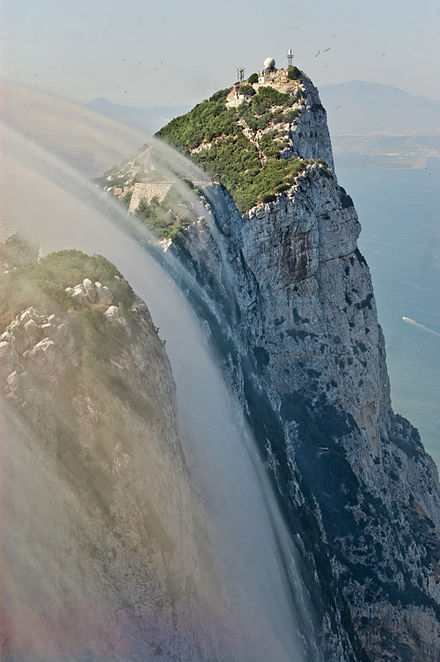
Most winds flow off mountains into the Mediterranean. (I still recall the scent of lavender carried in Provence, France, in the Mistral wind.) In contrast, the Levante(r) winds are mountain-gap winds flowing in the Strait of Gibralter. Here is a levante cloud forming due to the Levante(r) winds:
Yes, it's definitely time to hatten down the batches in our strong winds. Have you experienced the Chinook, the Mistral, the Sirocco, the Maria(h) or Levante(r) winds? Any cool cloud images to share?

Whoosh,
Steph
Ethiopian "Buna" or Coffee


