Total Pageviews

Showing posts with label brain. Show all posts

Tuesday, November 24, 2015

Getting Testy for Selenium: The Brain-Testes Struggle for The Element with Atomic Number 34

      Selenium, from Selene, the Greek goddess of the moon, is a gray crystalline element with atomic number 34.
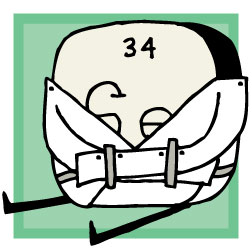


      A recent study shows that, in mice, both the brain and the testes compete for selenium when selenium is scarce.  In selenium-depleted male mice, testes use up most of the selenium, leaving the brain in the lurch, scientists report in the November 18, 2015, Journal of Neuroscience.


     Since most people in the U.S. get plenty of selenium via food grown in the selenium-rich Great Plains, the correlation of this issue from mice to human data has not been confirmed.

     In fact, selenium levels which are too high are more of an issue for human health. Levels higher than 400 mg (edit: 400 mcg) a day can lead to selenosis. Supplements have been purported to help with everything from increasing antioxidants to preventing lung cancer so that misuse of selenium supplements has become a problem.


       Selenium has also been studied for the treatment of dozens of conditions from asthma to arthritis to dandruff to infertility. However, the results have been inconclusive. Selenium is naturally occurring in many foods, most prominently in Brazil nuts and these foods:


       Selenium is also the name of a browser automation system released in mid-October of this year. The name Selenium comes from a joke made by one of the creators, in an email, mocking a competitor named Mercury, noting that you can cure mercury poisoning by taking selenium supplements. And a new name was jokingly born!


           Have you heard of selenium's "magical powers?" Have you discovered the browser automation system Selenium? And lastly, what is the coat doing on the first selenium image?

Almost a full moon out there,
Selene, er, Steph

Making "Function Boxes" with second graders--an introduction to algebra: Input and output on the construction paper strips with "magic" happening inside the shoebox. F(x) has a wonderful effect ;-).


Tuesday, October 15, 2013

The Brain Continued, A Reassuring Lie, and a Keychain Carabiner

 The Brain Continued, A Reassuring Lie, and a Keychain Carabiner

   
    I started a new Quality Assurance project this week for a subcontractor doing work for the EPA. That's all I can say about that...But this cartoon about confirmation bias came to mind:


 It is from an article published on Fast Company's website. It's a long article but worth it:

http://www.fastcompany.com/3019903/work-smart/8-subconscious-mistakes-our-brains-make-every-day-and-how-to-avoid-them

      We tend to agree with what we already know, hang out with people who think like us, and support causes like us. We would rather hear a reassuring lie than an inconvenient truth.


       And sometimes, just sometimes, a new lighted LED keychain brings such a smile to my face about a reassuring (?), convenient absurdity:


 Enjoy. And be careful climbing out there!


As always (third post--wahoo!), I would enjoy hearing from you. . .

Word Woman (aka Scientific Steph)

Tuesday, October 8, 2013

Einstein's Brain, the Corpus Callosum and Its Connection to 60's Bumpy, Wild VW Vans vs '10's Flat Screen "Smart Phones"


Einstein's Brain, the Corpus Callosum, & Its Connection to 60's Bumpy, Wild VW Vans  vs. '10's Flat Screen "Smart Phones"


       New research in the journal Brain describes measuring the connective tissue in and around the corpus callosum connecting the left and right hemispheres of Albert Einstein's preserved brain:

             http://brain.oxfordjournals.org/content/early/2013/09/24/brain.awt252

     The researchers describe their technique of measuring the thickness of the bands of nerve fibers that connect one side of the brain to the others. Einstein had more connections between the sides and his brain was more crenulated and bumpy according to researcher Dean Falk of Florida State University:

        “He did thought experiments where he’d imagine himself riding alongside a beam of light, and this is exactly the part of the brain one would expect to be very active in such thought experiments." Einstein's brain was bumpy, crenulated, full of folds and connections.


      I mentioned last week that I wanted to explore the evolutions of avatars from the VW Bus of the 60's to the Smart Phone for the 2010's. The tie-in with this new brain research is interesting. We have gone from a world of bumpy, interesting, crenulated interconnections and interactions via the avatar suggested by the '60's VW bug to our much flatter, screen-connected connections of the 2010's. I imagine Einstein would not think it good for our brains. The illusion of connection over flatter and flatter worlds must be affecting our brains. We might be losing our wrinkles...

       The change has been gradual...After the 60's VW bus, the 70's smiley face still connected us humans. In the 80's, the Rubik's Cube showed a shift from bumpy and crenulated to flat screens...but at least there were six, colorful, flat surfaces and they could interconnect and change and rotate. 

        It has been the increase in technology in the 90's (with the cell phone as avatar) that has accelerated the flatness trend. Ipods of the 2000's and Smart phones of the 2010's have continued that flatness.

        Enough blogging for today. My pup and I are going out to do a little exploring on this gorgeous autumn day. We might even imagine riding a beam of light :-).

         Here's hoping your ride today is bumpy, crenulated, and full of connections. I welcome your thoughts.


Crenulatedly,
Word Woman (aka Scientific Steph)