Ah! The Corundum Conundrum; isn't that a perfect mineralogical riddle for this age of the Dum-Dum?! Corundum, as well as the lollipop, occurs in a wide variety of colors.
Corundum is the crystalline form of aluminium oxide, Al2O3, generally containing traces of iron, titanium, vanadium and/or chromium. The blue, green, orange, yellow, purple and clear gem varieties are all sapphires.
The red, gemmy varieties of corundum are called rubies.
And, new to me, the pink-orange exotic gem variety is named padparadscha. The word is derived from the Sanskrit or Sinhalese padma raga, meaning “lotus color” and refers to the pink-orange color, similar to the lotus flower. Natural padparadscha is among the rarest and most highly prized varieties of corundum.
The word "corundum" is derived from the Tamil word Kurundam which originates from the Sanskrit word kuruvinda meaning ruby.
Because of corundum's hardness (corundum has a hardness of 9.0 on Mohs hardness scale), it can scratch almost every other mineral, except diamond. The hardness of corundum is 1/400 that of diamond.

Corundum is used as an abrasive in sandpaper and in machining metals, plastics, and woods.
Corundum belongs to the hexagonal crystal group (Recall the PEOTS post on Sapphire of the Sea).
In addition to its hardness, corundum is very dense at 4.02 g/cm^3, which is very high for a transparent mineral composed of the low-atomic mass elements of aluminium and oxygen.
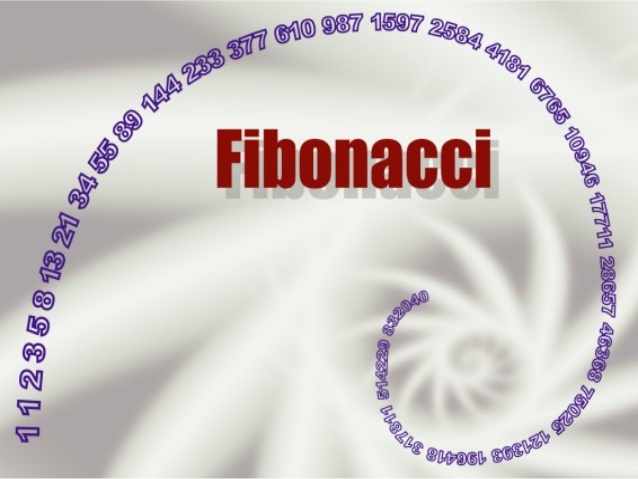
Atomic numbers of 13 for aluminum and 8 for oxygen, both Fibonacci numbers, can't be a corundrum conundrum coincidence, can it?
Let's see, hard, very dense, and colorful: where have we heard that corundum conundrum before? Riddle me Ruby? Dumped on by the Dum-Dums?
Happy Colorful (not Black) Friday from the wonderful colors of Zoë and friends in Ethiopia!
Very Thankfully,
Steph
"Brown University researchers have developed a method for making super-wrinkled and super-crumpled sheets of the nanomaterial graphene. The research shows that the topography can enhance some of graphene’s already interesting properties."
"Crumple a piece of paper and it’s probably destined for the trash can, but new research shows that repeatedly crumpling sheets of the nanomaterial graphene can actually enhance some of its properties. In some cases, the more crumpled the better."
"The research by engineers from Brown University shows that graphene, wrinkled and crumpled in a multi-step process, becomes significantly better at repelling water—a property that could be useful in making self-cleaning surfaces. Crumpled graphene also has enhanced electrochemical properties, which could make it more useful as electrodes in batteries and fuel cells."
The research is published in the journal Advanced Materials.
In keeping with our honey-comb theme of late, graphene is an allotrope of carbon in the form of a two-dimensional, atomic-scale, honey-comb lattice in which one atom forms each vertex.
It is the basic structural element of other allotropes, including graphite, charcoal, and carbon nanotubes.
"Researchers deposited layers of graphene oxide onto shrink films—polymer membranes that shrink when heated (kids may know these as Shrinky Dinks). As the films shrink, the graphene on top is compressed, causing it to wrinkle and crumple. To see what kind of structures they could create, the researchers compressed same graphene sheets multiple times. After the first shrink, the film was dissolved away, and the graphene was placed in a new film to be shrunk again."
"The researchers experimented with different configurations in the successive generations of shrinking. For example, sometimes they clamped opposite ends of the films, which caused them to shrink only along one axis. Clamped films yielded graphene sheets with periodic, basically parallel wrinkles across its surface. Unclamped films shrank in two dimensions, both length- and width-wise, creating a graphene surface that was crumpled in random shapes."
"They showed that a highly crumpled graphene surface becomes superhydrophobic—able to resist wetting by water. When water touches a hydrophobic surface, it beads up and rolls off. When the contact angle of those water beads with an underlying surface exceeds 160 degrees—meaning very little of the water bead’s surface touches the material—the material is said to be superhydrophobic."
"The team also showed that crumpling could enhance the electrochemical behaviors of graphene, which could be useful in next-generation energy storage and generation. The research showed that crumpled graphene used as a battery electrode had as much as a 400% increase in electrochemical current density over flat graphene sheets. That increase in current density could make for vastly more efficient batteries."
Happy crumpling from blizzardy Denver!
Steph
"Beams made of sawn diatom shells and poked with a diamond-tipped probe until they cracked have revealed that the microbial armor has the highest strength-to-weight ratio of any known biological material. According to the scientists who conducted the study, the remarkable toughness of this material is likely due to its honeycomb-like architecture and flawless silica build." SEM images of diatoms include ones like these:
Diatoms are marine algae that come in a wide variety of shapes. Those with honeycomb shapes are especially strong.
"The scientists studied the shells – called frustules – of Coscinodiscus, a hamburger-shaped diatom. Like all diatoms, it bears two frustules that fit together like the halves of a petri dish. The shells are perforated by pores."
Further details of the study are described in this link. Some of these pores occur in Fibonacci patterns (similar to sunflower seed whorls) as in this SEM of another diatom.
A closer look at the microstructure is seen in this diagram:
Mighty perforated tiny organisms with great natural strength occurring in Fibonacci patterns and packed together in hexagonal groupings--anything familiar here?
Anyone else reconcile Fibonacci numbers and hexagons by noting 6 is made of two sets of three? Other thoughts?
Diatomaceously yours,
Steph
Beware today, 3/15:
The hexagonal chitinous invisibility cloak of the Sapphirina or "Sapphire of the Sea"
allows it to change from deep violet-indigo colors to blue-green to
all colors of the spectrum to nearly completely invisible.
This exquisite ability is due, in part, to the hexagonal plates on its surface (here seen under a Scanning Electron Microscope (SEM)):
The male of this parasitic copepod species shine their colors while the females are mostly translucent all the time. This structural coloration, first described by Isaac Newton and Robert Hooks, allows the intense and varied bright colors (as seen in peacock feathers).
The Sapphirina reminds me a bit of our old friend the water bear or Tardigrade.
How could one not be enchanted by this beautiful aquatic creature, first described in the early 1800's, that looks like a gem and has ties to hexagonal packing ?
It's the perfect ambassador to ring in 2016! Happy Hexagonal New Year!
Looking forward to the power of 6 in the coming year; how about you?!
Steph
2016 blowing in via a Bernoulli Blower!