Caramel Dioxide: New Fracking Ingredient?
Leave it to kindergarteners to come up with great new things. After our CO2 experiment a couple of weeks ago on Science Friday, one of the teachers left me this note about his observations at the sensory table:
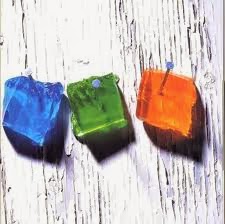
"Caramel dioxide" as a fracking ingredient does not seem all that far afield...Besides the standard water and "frac sand," fracking mixtures have been known to include corn husks, gelatin/jello (The topic of fracking or hydraulic fracturing has been described by fellow bloggers as akin to nailing jello to a tree.):
guar bean gum, benzene, naphthalene, hydrochloric acid, sodium chloride (my kindergarteners know that one), ammonium persulfate, formic acid, and quaternary ammonium chloride. (Benzene, in particular, has been linked to causing cancer). In fact, you may look up the ingredients used in the fracking fluid of over 55,000 wells here:
http://fracfocus.org/chemical-use/what-chemicals-are-used
Well, well, well, I will back up to the definition of hydraulic fracturing or fracking first. If you haven't been under a rock for the past five years (pun intended again), you likely know that oil and gas companies use copious amounts of water, some sand as a proppant (to prop open pathways in the "permeability-challenged" rocks like shale)

and a mixture of chemicals used to thicken the water in order to suspend the sand in the water, eliminate bacteria in water that produces corrosive by products, and preventing corrosion of the pipe (among other things).
The petroleum class I took in 1982 used A.I. Leverson's Petroleum Geology textbook from the 1960's. I recall still his description of petroleum geology as primarily the study of fluids. This is part of what concerns me greatly about fracking...the use of water in very large amounts to reap another fluid, especially one which is non-renewable. Here in the arid west, where water is such a precious commodity. . .
Petroleum Geology 101: Hydrocarbons are created in source rock (like shales), move to reservoir rock like sandstone and limestone) and are capped by impermeable cap or seal rocks:

Note that fracking was originally used to open up permeability in sandstones and limestones (the reservoir rocks). The use of fracking to extract hydrocarbons directly from source rocks, such as shale, requires more water, sand, and chemicals under higher pressures. Fracking of shales since the 1990's is essentially hastening the movement of hydrocarbons out of source rocks without waiting for them to move to reservoir rocks (with their higher porosities and permeabilities).
The overarching argument about fracking does distill to whether it is worth the resources and potential chemical contamination to extract hydrocarbons. In the short-term, perhaps it is, especially if it replaces coal extraction. Overall, investing in solar and wind power and other renewable resources sure makes a lot more sense in the longer term.
This piece from the March 14, 2013 NY Times summarizes fracking issues well:
http://www.nytimes.com/2013/03/14/opinion/global/the-facts-on-fracking.html?_r=0
The oil and gas industry's refrain is that fracking occurs thousands of feet below the surface and that ground water is only hundreds of feet below the surface. Yet, anything injected in the earth is certainly subject to moving along fractures to eventually reach the groundwater and surface of the earth. In addition, spilling of fracking fluid at the well or storage sites is a very real concern. Having worked on oil rigs in the 1970's, I saw firsthand how careless some folks could be with those fluids around the well bore. And in our September Colorado floods, we saw how storage of anything used in oil wells could be compromised by mother nature.
I certainly don't have all the fracking answers and I want to explore this topic further next week. I will leave you with this photograph of a 16-page flyer a friend received about guar gum used for fracking fluid:

The flyer describes how guar bean gum is the same stuff used in your vanilla ice cream and in your fracking fluid. I believe I will go have some vanilla ice cream (with no guar bean gum) and ponder next week's blog. Better yet, add some caramel dioxide to my scoop. . .
I would enjoy hearing your thoughts about fracking, caramel dioxide, guar bean gum. . .
Word Woman (Scientific Steph)
.

