Total Pageviews

Wednesday, May 15, 2019

April Arkansas Gems, Fossils, and Meanderings

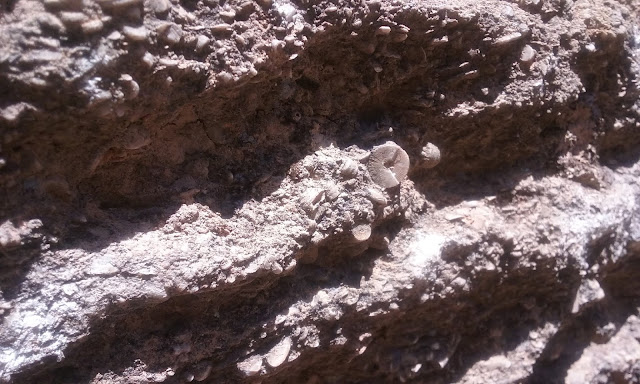
       A post about Arkansas gems, fossils, and rocks is overdue. This crinoid piece is especially well-preserved. Here is a bit more information about crinoids.


     We spent many hours sorting and breaking apart Mississippian and Ordovician rocks. What joy!


Quartz crystals: 


Crinoid stalk or stem pieces:


     This sample was not available to bring home :-(.


But, this brachiopod sample  was: 


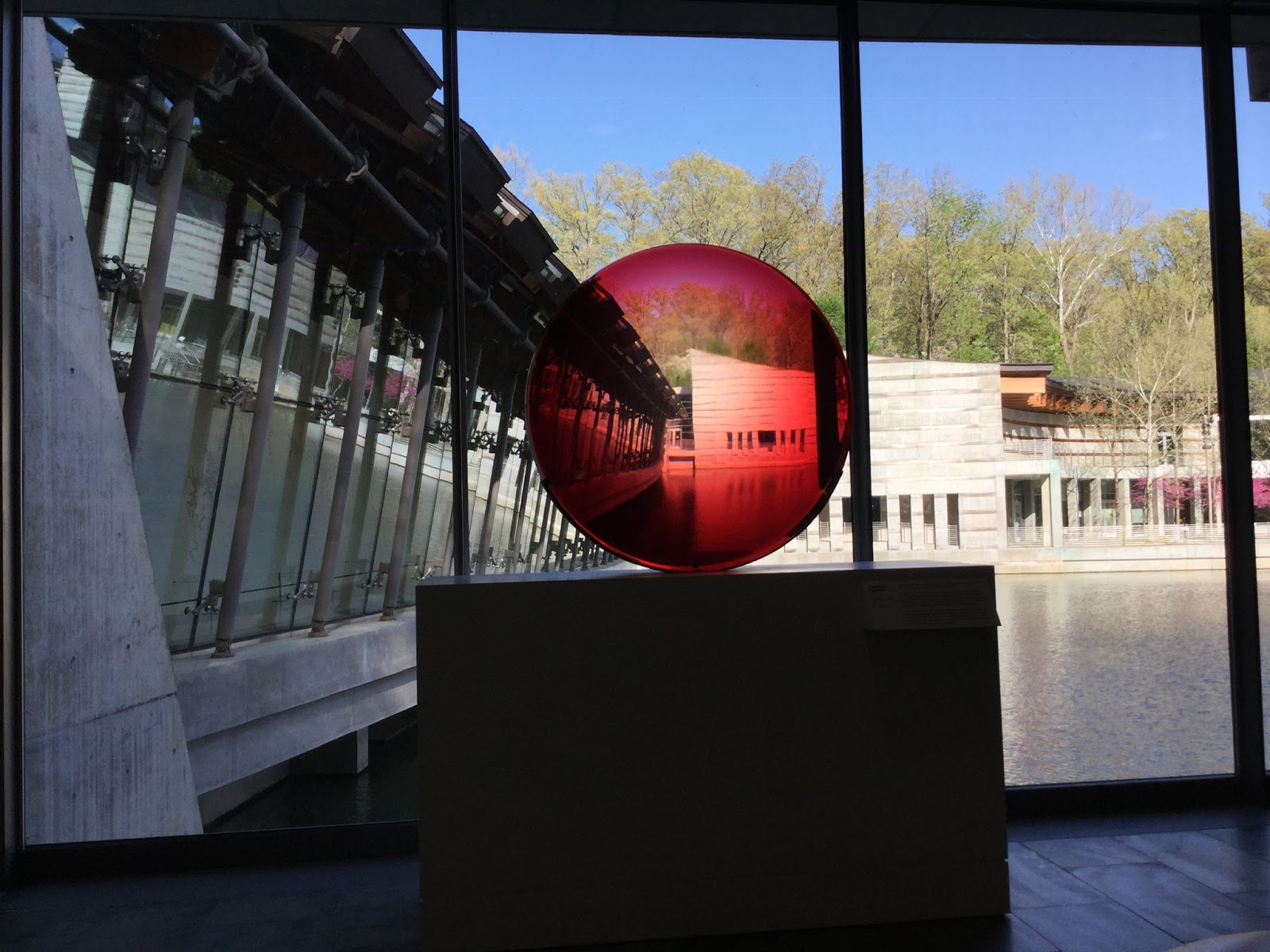
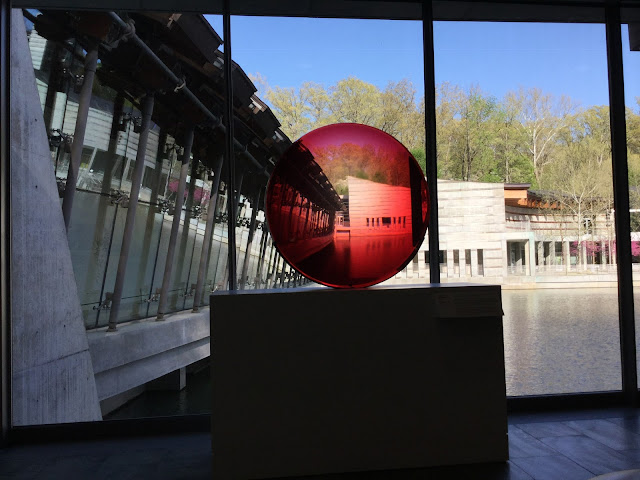
       My Mom, Smith College friend, Karen, and I had a great time exploring northwest Arkansas.We found brachiopods, crinoids, quartz crystals, and explored Crystal Bridges Art Museum, Thorncrown Chapel, the Ozark Folk Center and Blanchard Springs Caverns located in Fifty-Six, AR. Little Rock Central High School was the last stop before dropping Karen at her aunt's home in Hot Springs and heading back to Bentonville.


     We almost missed the road to Thorncrown Chapel, even though we were expressly looking for it. It was worth the trek!


        The outdoor artwork and plantings are some of my favorite parts of Crystal Bridges.


     Pappy and Lightning entertained us at the Ozark State Park Folklore Center.
   

     More highlights:


      Mom and Maizie were big fans of the Frank Lloyd Wright home:


      We enjoyed the geodesic dome:


       Alas! I left my iPad atop my trusty Subaru at one of the last overlooks on the way from Hot Springs to Bentonville. I saw it fly off in the rear view mirror. The photos were not in the cloud. So, a few photos from my friend and from my phone remain. It was most memorable and mom can now answer the question “Why are you going to Arkansas?” with some of these images. 


      Mom liked the half-mile trek through Blanchard Springs Caverns in Fifty-Six, especially.

        And we all really liked the giant bronze spider, Maman, holding her marble eggs protectively over the main entryway at Crystal Bridges.


        [I am writing this on my phone without a 'u' key so the photos will do most of the talking this timaround.]


        Hope you'll have a chance to make Arkansas plans some time. It is The Natural State and it is a Gem!

Steph


Saturday, March 23, 2019

What the Sand Hill: Cranes, Lanes, and Automobiles

      Maizie, my field assistant and resident canine, and I enjoyed a two-day trek to observe the Sand Hill Cranes migrating northward in the San Luis Valley in south central Colorado. 


      We started at Great Sand Dunes National Park and Preserve, of course.


      We spent some time listening to the cranes in San Luis State Park, although we did not see many of the graceful birds.


     We wondered what this unidentified two story building 


with a locked gate is adjacent to the Mosca Campground, seen in the left-center part of this image (very mysterious-but, I digress).


      Our next day search for the Sand Hill Cranes took us first to the Alamosa Wildlife Preserve and then, enroute to the Monte Vista Wildlife Preserve, to a cow pasture adjacent to a very narrow two-lane road.


     We were alone with the birds and the cows when this noisy, chortling flyover of Sand Hill Cranes happened. Some have asked if I took the video; no, it was Maizie with her crazy-good iPad filming skills. The video is 3:39 long and gets very exciting a few seconds in. 


       Antigone canadensi
s (which are classified as part of the Gruidae family) currently number 450,000 or so in North America. They are ancient birds, having origins 2.5-10.5 million years ago, depending on classification.


     Here's hoping you will see or have seen these magnificent creatures, especially as they dangle their legs for a perfect landing.


What the Sand Hill?
Steph


Sunday, February 17, 2019

The Pink Meanie, New Jellyfish Species: Pair With a Nice Peanut Butter?

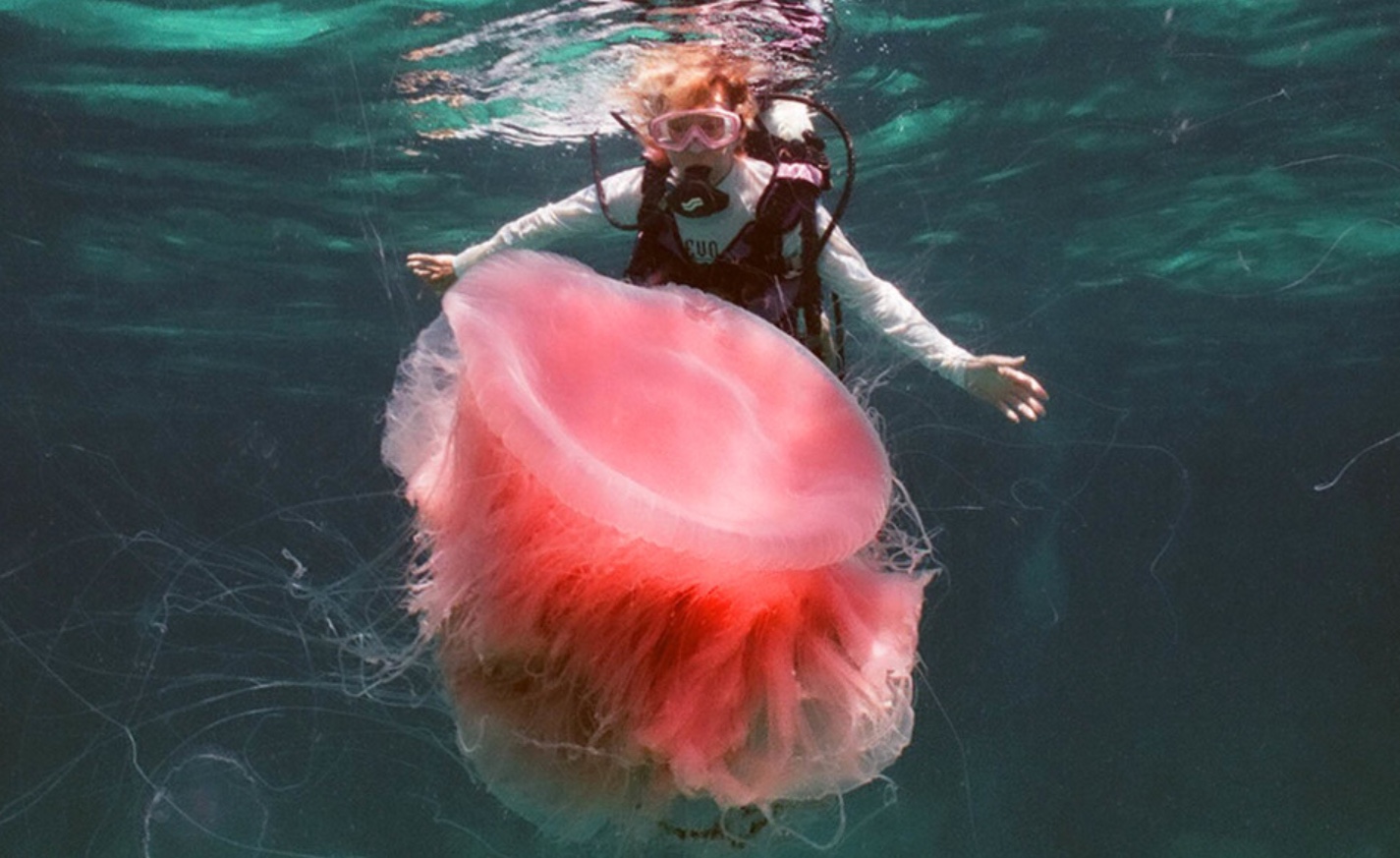
        With up to 100-foot-long tentacles and measuring three to five feet in diameter, the Pink Meanie jellyfish, classified as a new species in the Gulf of Mexico in 2011, is both striking in appearance and in stingyness (not stinginess!). 


       Officially named Drymonema larsoni, the rare giant pink invertebrate looms large and menacing in the Gulf Waters. It was the first new jellyfish family named since the 1920's.


      Up to 30 moon jellies have been found inside a single Pink Meanie. 


      “It’s rare that something like this could escape the notice of scientific research for so long. That it did is partially due to Drymonema’s extreme rarity almost everywhere in the world, except the northern Gulf of Mexico, where it bloomed in 2000. However, much of the project’s success can be tied to the use of molecular techniques, such as DNA sequencing, in addition to more traditional visual examination,” stated Dr. Keith Bayha from Dauphin Island Sea Lab.


     The kindergartners made great Pink Meanie models and enjoyed the moniker greatly:


        They were aghast that most jellyfish projects for kids give the jellyfish models eyes. Not on our Pink Meanies!


Are you surprised it took so long to discover these giant, pink jellies? Do you have a different nickname suggestion?

Steph

Friday, January 11, 2019

Am I Brilliant Blue? Lapis Lazuli Embedded in a 1000-Year-Old Woman’s Teeth

      The earth is abundant with brown, green, red, and yellow pigments but  “finding a stable blue is like willing a river to stop flowing.” In 2017, a chemist made headlines around the world for discovering the first new blue in 2 centuries, named YInMn Blue.”


         Lapis lazuli in a 1000-year-old woman’s teeth indicate she was likely a manuscript scribe who mixed her saliva with the precious ground ultramarine or lapis lazuli as she copied ancient texts.


    In 2014, archaeologist Dr. Anita Radini was studying the dental calculus of bodies buried in a medieval church. This hardened plaque, or tartar, is a challenge to a modern dentist, but it’s crucial evidence for researchers peering into the past. While other body parts disintegrate, teeth often stubbornly remain, and the chemical components of these teeth can offer a glimpse into our daily lives.


          At the time, Dr. Radini was scraping old teeth in pursuit of calcified starches, a useful proxy for diet. Her colleague, Dr. Christina Warinner, an expert in the evolution of ancient microbes at the Max Planck Institute, hoped to better understand oral bacteria. But, something in the mouth of specimen B78 distracted both researchers from their initial pursuits: scattered specks of a brilliant blue.


     “Can you imagine the kind of cold calls we had to make in the beginning?” Dr. Warinner told The Atlantic. “‘Hi, I’m working with this thing on teeth, and it’s about 1,000 years old, and it has blue stuff in it. Can you help me?’ People thought we were crazy.”


     Drs. Warinner and Radini assembled a multidisciplinary color detection squad. Dr. Monica Tromp, a New Zealand-based expert in particle analysis with the Max Planck Institute, took on the task of identifying the blue hue’s origin. Dr. Alison Beach, a history professor at The Ohio State University, a Smith College graduate, and an expert in medieval German women’s role in copying illuminated manuscripts, offered essential cultural context. Drs. Warinner and Radini also consulted a scholar of medieval trade about the economic context in which B78 lived. What they found brought smiles to everyone’s faces

Dental calculus jaw and teeth photo

    B78, the authors determined, was a woman who lived sometime between 997 and 1162 A.D. She died in middle age, between 45 and 60 years old. Except for the blue color in her mouth, she “was otherwise unexceptional,” according to the study authors. But in a new paper published this week in the journal Scientific Advances, the color detectives showed B78 had lapis lazuli in her mouth—evidence she was a highly-skilled manuscript scribe in a time when most people assumed illumination was the exclusive domain of men.


     “It didn’t surprise me, it thrilled me,” says Dr. Beach,  co-author in the study. Dr. Beach has studied female manuscript makers since graduate school, hoping to make the public understand their role in producing some of the most elaborate artworks of the age. But because most of the volumes are unsigned—and the few that are signed were signed by men—making the case for women’s role in these spaces has always been a challenge. But the blue found in B78’s teeth is stronger evidence than one might expect.
Illuminated manuscript nun art
A self-portrait of Guda, a 12th century nun and illuminator, signed "Guda, a sinful woman, wrote and painted this book." The source of the blue-green color is unknown.
   
     "Blue was, is, and will continue to be the hardest color to find or create."


      In the medieval period, artists had five sources of the color: ultramarine, azurite, Egyptian blue, smalt, and vivianite. The most prized of these was ultramarine, more commonly known in its ground and purified form as lapis lazuli. Found only in one region of Afghanistan, for millennia lapis lazuli demanded the same price as gold. It wasn’t, in other words, something you’d expect to find in random medieval dental calculus. “This isn’t a kind of paint you just give to someone who’s learning,” Dr. Beach says (contrary to the suggestion of an outside reader evaluating the paper before publication, who believed the woman was just a janitor cleaning up after the real manuscript makers).


     The study entertains other possibilities—that B78 was undergoing lapidary medicine, where she swallowed pigments for her health, or that she engaged in “devotional osculation,” where Christians kissed paintings as part of worship. But the way the blue pigment was distributed deep into the teeth, in fairly consistent layers over time, indicated B78 was one of the “modest and pious women who quietly produced the books of medieval Europe,” the authors wrote. Specifically, Dr. Beach thinks B78 and her colleagues would have been narrowing the point on their fine-tipped brushes with their mouths, mixing lapis lazuli into their dental plaque in the process.


     Dr. Beach and other medieval historians are optimistic this method will apply broadly to other manuscript makers of the era. “I had never heard of using dental calculus as a window on somebody’s everyday life,” Dr. Beach says, but now that researchers know where to look, the possibilities are limitless. “There’s so few sources that medieval historians have for ordinary people. This one clue of the lapis lazuli opens a whole window on the life of an ordinary women in a period in which we have almost no sources,” Dr. Beach adds. “She’s not a queen, she’s not a duchess. She’s just a person who lived and worked and died.”

      Blue is my favorite color, Dr. Beach is a Smithie, and I enjoy mazarine minerals, especially lapis lazuli. How about you? 

       Happy Blue Year!

Steph

Nine ways to draw our ever bluer state: