A post about Arkansas gems, fossils, and rocks is overdue. This crinoid piece is especially well-preserved. Here is a bit more information about crinoids.


We spent many hours sorting and breaking apart Mississippian and Ordovician rocks. What joy!


Crinoid stalk or stem pieces:
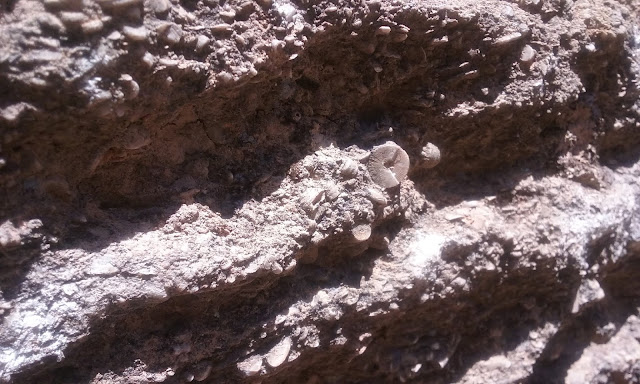
This sample was not available to bring home :-(.


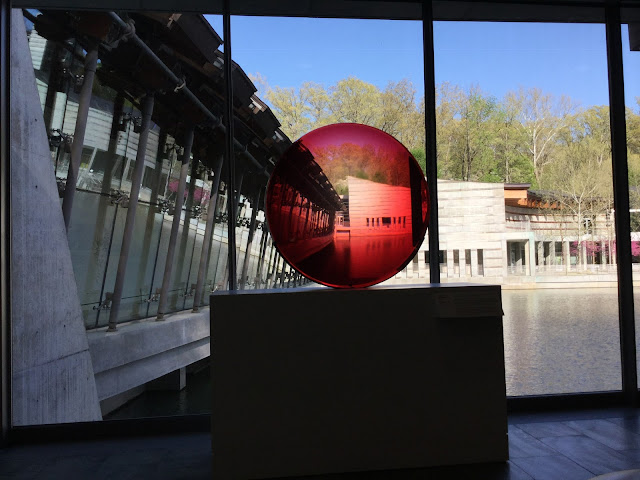
My Mom, Smith College friend, Karen, and I had a great time exploring northwest Arkansas.We found brachiopods, crinoids, quartz crystals, and explored Crystal Bridges Art Museum, Thorncrown Chapel, the Ozark Folk Center and Blanchard Springs Caverns located in Fifty-Six, AR. Little Rock Central High School was the last stop before dropping Karen at her aunt's home in Hot Springs and heading back to Bentonville.


We almost missed the road to Thorncrown Chapel, even though we were expressly looking for it. It was worth the trek!

The outdoor artwork and plantings are some of my favorite parts of Crystal Bridges.

Pappy and Lightning entertained us at the Ozark State Park Folklore Center.

More highlights:


 Mom and Maizie were big fans of the Frank Lloyd Wright home:

We enjoyed the geodesic dome:

Alas! I left my iPad atop my trusty Subaru at one of the last overlooks on the way from Hot Springs to Bentonville. I saw it fly off in the rear view mirror. The photos were not in the cloud. So, a few photos from my friend and from my phone remain. It was most memorable and mom can now answer the question “Why are you going to Arkansas?” with some of these images.

Mom liked the half-mile trek through Blanchard Springs Caverns in Fifty-Six, especially.
And we all really liked the giant bronze spider, Maman, holding her marble eggs protectively over the main entryway at Crystal Bridges.

[I am writing this on my phone without a 'u' key so the photos will do most of the talking this time around.]
Hope you'll have a chance to make Arkansas plans some time. It is The Natural State and it is a Gem!
Steph


We spent many hours sorting and breaking apart Mississippian and Ordovician rocks. What joy!

Quartz crystals:

Crinoid stalk or stem pieces:

This sample was not available to bring home :-(.

But, this brachiopod sample was:

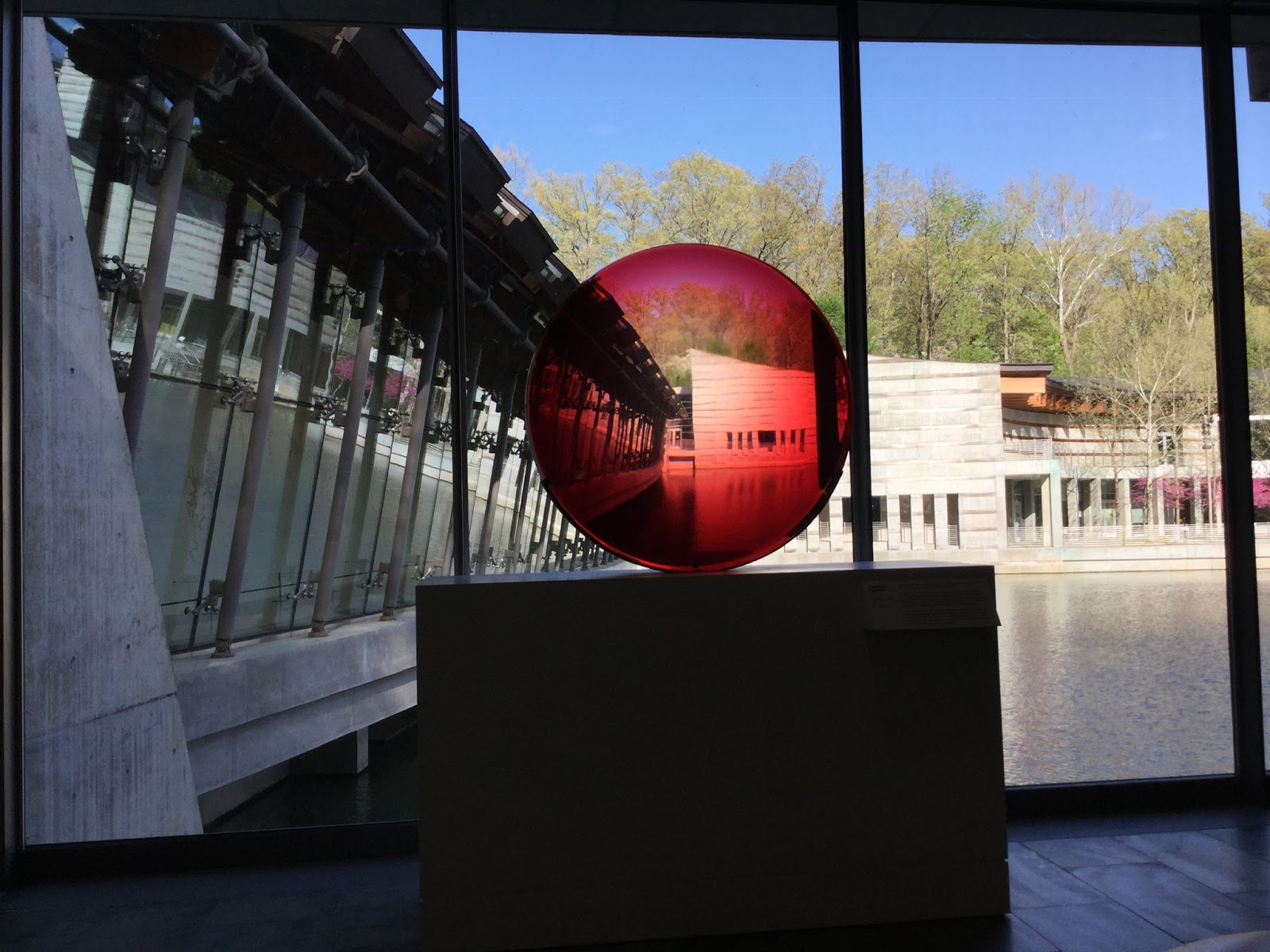
My Mom, Smith College friend, Karen, and I had a great time exploring northwest Arkansas.We found brachiopods, crinoids, quartz crystals, and explored Crystal Bridges Art Museum, Thorncrown Chapel, the Ozark Folk Center and Blanchard Springs Caverns located in Fifty-Six, AR. Little Rock Central High School was the last stop before dropping Karen at her aunt's home in Hot Springs and heading back to Bentonville.


Pappy and Lightning entertained us at the Ozark State Park Folklore Center.



We enjoyed the geodesic dome:

Alas! I left my iPad atop my trusty Subaru at one of the last overlooks on the way from Hot Springs to Bentonville. I saw it fly off in the rear view mirror. The photos were not in the cloud. So, a few photos from my friend and from my phone remain. It was most memorable and mom can now answer the question “Why are you going to Arkansas?” with some of these images.

Mom liked the half-mile trek through Blanchard Springs Caverns in Fifty-Six, especially.
And we all really liked the giant bronze spider, Maman, holding her marble eggs protectively over the main entryway at Crystal Bridges.

[I am writing this on my phone without a 'u' key so the photos will do most of the talking this time around.]
Hope you'll have a chance to make Arkansas plans some time. It is The Natural State and it is a Gem!
Steph


