Total Pageviews

Showing posts with label Jurassic. Show all posts

Thursday, February 16, 2017

"Like New" Coprolite Fossils From East Central Utah

     You can't make this stuff up!


      I ordered several Jurassic age coprolite (fossilized dinosaur scat) from east central Utah from a rock shop. 


       The order form lists the condition of this "Christmas Poop -- Better than Coal" as "Like New." These are "Authentic Fossils" and they are "Like New."      

☆☆☆☆☆☆☆☆☆☆☆☆☆☆☆


☆☆☆☆☆☆☆☆☆☆☆☆☆☆☆

      The Cleveland-Lloyd Dinosaur Quarry of east central Utah has produced some of the most well-preserved and complete sets of carnivore dinosaur skeletons (and dinosaur poop!) in the Jurassic formations of North America. 


     Over 15,000 dinosaur bones have been discovered so far from this quarry, a natural predator trap (similar to the La Brea Tar Pits). Many of the rearticulated dinosaur skeletons reside in over 65 museums worldwide. 


      The quarried mudstone is part of the distinctive red Morrison Formation (of Colorado's Red Rocks Amphitheater fame).


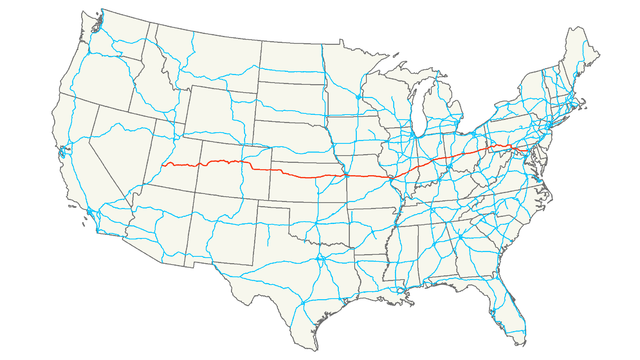
      Interstate-70 divides the area into the north and south halves of the San Rafael Swell, where the quarry is located. (I-70 starts/ends west of the quarry).


      The atypical predator/prey ratio (3:1) represented at the quarry may be explained by the pack hunting tendencies of the most prevalent skeletons, the Allosaurus.  


       The high percentage of smaller individual allosaurs suggests that younger dinosaurs worked together to capture and kill prey. The predators may have followed their prey into the mud and subsequently became mired in the predator trap themselves. (Insert "drain the swamp" joke here).


Look! Fossils "like new!"
Steph

Wednesday, December 14, 2016

Thinner Crust: Not Just for Pizza Anymore -- Oceanic Crust has Thinned Since Pangaea Jurassic Time

      Oceanic crust created by the earth today is significantly thinner than crust made 170 million years ago during the time of supercontinent Pangaea, according to U. of Texas, Austin, scientists. The Earth's crust under the oceans is up to 1 mile thinner today than it was during that Pangaean time.


      "The thinning is related to the cooling of earth's interior prompted by the splitting of Pangaea, which broke up into the continents that we have today," said Dr. Harm Van Avendonk, the lead author of the study. The research published in Nature Geosciences on December 12, 2016, illuminates how plate tectonics has influenced the cooling of the Earth's mantle throughout geologic history.


      "What we think is happening is that the supercontinent was like an insulating blanket," Van Avendonk said. "So when these continents started opening up and the deeper mantle was exposed, more or less, to the atmosphere and the ocean it started cooling much faster."


      The mantle is the very hot, but mostly solid, layer of rock between the Earth's crust and core. Magma from the mantle forms oceanic crust when it rises from the mantle to the surface at spreading centers and cools into the rock that forms the very bottom of the seafloor. 


     Since about 2.5 billion years ago, the mantle has been cooling, a phenomenon that does not influence the climate on the surface of the Earth and has nothing to do with the issue of short-term human-made climate change (which is a real phenomenon, DT!). This study suggests that since the breakup of Pangaea, the cooling rate of the mantle has increased from 6 - 11 degrees Celsius per 100 million years to 15 - 20 degrees per 100 million years. Since cooler mantle temperatures generally produce less magma, it is a trend that's making modern day ocean crust thinner. The illustration below of a slice of earth ties in well with the pizza analogy ;-).


      "It's important to note the Earth seems to be cooling a lot faster now than it has been over its lifetime," Dr. Van Avendonk said. "The current state of the Earth, where we have a lot of plate tectonic events, this allows the Earth to cool much more efficiently than it did in the past."


      The research that led to the connection between the splitting of the supercontinent and crust thickness started when Dr. Van Avendock and Ph.D. student Jennifer Harding, a co-author, noticed an unexpected trend when studying existing data from young and old seafloor. They analyzed 234 measurements of crustal thickness from around the world and found that, on a global scale, the oldest ocean crust examined, Jurassic in age, is 1 mile thicker, as noted above. The oldest oceanic crust (or sima, short for silica and magnesium, mainly basalt) is Jurassic in age due to the "recycling" nature of this denser crust versus less dense continental crust (or sial, short for silica and aluminum).


     The link between crust thickness and age prompted two possible explanations, both related to the fact that hotter mantle tends to make more magma. (1) Mantle hot spots, highly volcanic regions, such as the Hawaiian Islands and Iceland, could have thickened the old crust by covering it in layers of lava at a later time. Or, (2) the mantle was hotter in the Jurassic than it is now.


      The analysis ruled out the hot spot theory; thick layers of old crust formed just as easily at distances greater than 600 miles from hotspots, a distance that the researchers judged was outside the influence of the hotspots. In contrast, the analysis supported the hypothesis of mantle cooling after the breakup of the supercontinent.

      The discovery that breaking up Pangaea cooled the mantle is important because it gives a more nuanced view of the mantle temperature that influences tectonics on earth. The researchers also note that the study illustrates the success that can come from spontaneous collaboration and leveraging basic research on a global scale.

Coolly and Warmly,
Steph


Tuesday, March 25, 2014

Fossilized Swedish Ferns: Don't Step on My Toe, Sis!


       The beauty of this 180 million-year-old fossilized fern from southern Sweden shows cells in various stages of mitosis. It combines both rocks and plant organelles frozen in a volcanic flow.


      The study was published last week in by Benjamin Bomfleur, Vivi Vajda, et al:


             FOSSIL FERN CHROMOSOMES


      The fossil had been languishing in a Swedish Museum drawer since the 1960's. The amazing thing about the specimen is the degree of cell detail shown with nuclei intact, distinct cytoplasm, and cells dividing, preserved as a hot brine of minerals replaced the cell structures. What a mitosis show!


     The fossilized fern in the family Osmundaceae is essentially identical to the modern day Royal Fern, with little change in genome or DNA content. Like the classic horsetail fern, this Royal Fern is the same today as during the Jurassic Era. It is quite comparable to the cinnamon fern of the eastern U.S. and Canada.

     This living fossil cinnamon fern reminds me, on a different scale, of mudcracks and other features seen on aerial images and segues to this amazing view of Moab, Utah, just published this week by the U. S. Geological Survey:

     
    The wind deposited and eroded features includes numerous fins and arches show in the southwest and northeast portions of the image around the central city of Moab. These features on the ground in the Jurassic Entrada Sandstone look amazing and represent such change:


   So, on one hand, here's a Jurassic fossil fern that hasn't changed in 180 million years, and a Jurassic-deposited landscape that is being eroded and changed every day. Recent collapses of arches in nearby Arches National Park allude to this change.

    Isn't geology grand in all the contrasts and similarities? Have you been to these places? Were you in awe, wonder, happy and rich in fossils?


A fossil and Utah fan,


Word Woman (Scientific Steph)

Tuesday, January 21, 2014

Fossilized Jurassic Spiders, Other Chelicerata, and Impractical Jokes


     Two weeks ago the horseshoe crab, a marine arthropod, was the topic of Partial Ellipsis of the Sun. This week, another member of the Chelicerata, the spider,  will be the focus.

      Besides the smooth transition from one arthropod to another, I was entranced by this recent large spider discovery from fine volcanic ash beds in Daohugou, China (in Inner Mongolia):


      The giant Jurassic (201-145 million years ago) male spider's body length is 1.65 centimeters long, and its first leg length is 5.82 centimeters, the largest fossilized spider found to date (as of January 8, 2014).  It was significantly different, according to researchers from the University of Kansas, from the female of the species, Nephila jurassica, to warrant an entirely new genus and family. Lots of room for discussion there! :-)

      The researchers believe that this male spider is one of the first orbweaver spiders after a detailed look at foot claws, hairs and genital organs, using a Scanning Electron Microsope (SEM). 

       The full article featuring Paul Selden of the U of Kansas is linked here:

                                     GIANT JURASSIC SPIDER IN VOLCANIC ASH

      So, how to get to impractical jokes from this giant Jurassic spider? Via the Jumping Spider, of course:


     Jumping spiders make up 13 percent of the entire air-breathing chelicerates. While the marine horseshoe crabs rely on external fertilization, air-breathing spiders use internal (but usually indirect) fertilization. 

      The jumping spider is likely the closest to what I was like after a very impractical joke involving the Jurassic time period.

       I worked on an extensive project using aerial photography and Landsat imagery for one of our biggest clients, Amoco Oil Corporation. I wrote a very detailed 200-page, single-spaced, report on the geologic basin (in the days where we had secretaries to type everything from scratch, no computers of course, and no global replace feature).


       The President of our company, Chuck, called me in one day and showed me a letter, written on very fancy, thicker-than-regular-paper AMOCO Oil Company letterhead. It was addressed to him and said something like: "On page 143 of your report we have just received, I see that Jurassic is misspelled as Jurrassic. Jurassic does not have two r's in it. I cannot believe such unprofessional work is coming to us from your company."

       I was a bit concerned, as a newly-minted 23-year-old geologist.

       "What should we do about this, Steph?" asked my boss, looking very serious. "Termination?"  

       It was only then that I heard the crowd of geologists laughing outside Chuck's door. One of my fellow geologist's girlfriend had gotten the AMOCO stationery from her work there and helped with the elaborate impractical joke.

       Jumping Spider indeed!


        How about you? What are some of the best practical or impractical jokes ever played on you? Did any of them involve words, spiders, or other arachnids?

Jurassically Yours,

Word Woman (Scientific Steph)