The mystery of why the dinosaurs became extinct after a Cretaceous meteor strike, while birds and mammals thrived, may have been solved.

Paleontologists have discovered that dinosaur young took so long to hatch and mature into adulthood that populations failed to recover quickly enough after the devastating impact 65 million years ago.

In contrast, birds and small mammals took only a few weeks for their offspring to emerge giving them a distinct advantage.

The discovery was made by researchers at Florida State University and the University of Calgary, who realized it was possible to calculate how long it took for dinosaurs to hatch based on marks on the teeth of embryos and babies.

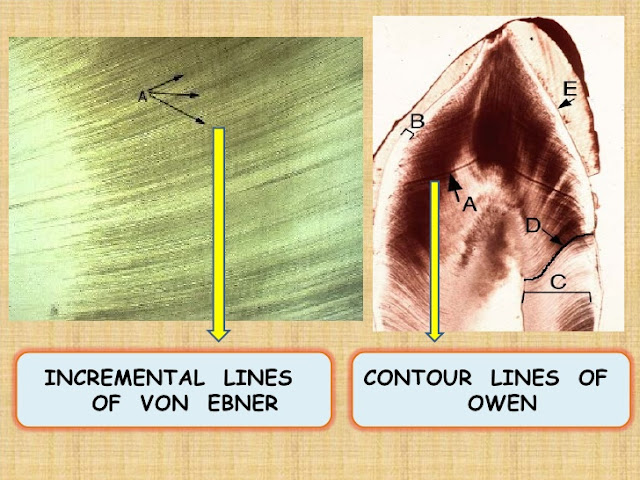
Similar to tree rings growing a new layer each year, teeth grow a new layer each day, which is seen in microscopic lines in the dentine. By counting the daily lines of Von Ebner, scientists found it took dinosaurs between three and six months to hatch.

The lengthy incubation period in the clutches of dinosaur eggs, in comparison to small mammals, made the hatchlings, and their parents, vulnerable to predators and left them struggling to re-establish their species.
“Some of the greatest enigmas about dinosaurs pertain to their embryology; virtually nothing is known,” Dr. Gregory Erickson of FSU said. “We suspect our findings have implications for understanding why dinosaurs went extinct at the end of the Cretaceous period, whereas amphibians, birds, mammals and other reptiles made it through and prospered.”

Because birds are in the same clade with dinosaurs, scientists have long assumed that the duration of dinosaur incubation was similar to birds, whose eggs hatch within 11 to 85 days.

However, similar-sized reptilian eggs typically take twice as long to hatch, ranging from several weeks to many months. To find out where dinosaurs fit in, the team studied the fossils of dinosaur embryos.

“Time within the egg is a crucial part of development, but this earliest growth stage is poorly known because dinosaur embryos are rare,” said Dr. Darla Zelenitsky of the U of Calgary. “Embryos can potentially tell us how dinosaurs developed and grew very early on in life and if they are more similar to birds or reptiles in these respects.”

The two types of dinosaur embryos researchers examined were those from a Protoceratops, (seen below) a goat-sized dinosaur found in the Gobi Desert of Mongolia whose eggs were chicken-egg-sized and Hypacrosaurus, a gigantic duck-billed dinosaur found in Alberta, Canada, with eggs weighing 4 kilograms (9 pounds.)

The researchers ran the embryonic jaws through a CT scanner to visualize the forming dentition. Then, they extracted several of the teeth to examine with a Scanning Electron Microscope (SEM).

Their results showed nearly three months incubation for the small Protoceratops embryos and six months for the embryos from the giant Hypacrosaurus (below).

Dental battery (the complex set of six-layered dinosaur teeth including replacement teeth) and von Ebner lines in fossil dinosaur teeth were first observed and illustrated over 150 years ago by Richard Owen (shown below), the scientist who coined the term Dinosauria or "Terrible Lizard."

I wonder if Dr. Owen would have given his eye teeth to change that moniker to Dinopoulia, Greek for "Terrible Bird."
It's Clutch Time, in more ways than one!
Steph

Paleontologists have discovered that dinosaur young took so long to hatch and mature into adulthood that populations failed to recover quickly enough after the devastating impact 65 million years ago.

In contrast, birds and small mammals took only a few weeks for their offspring to emerge giving them a distinct advantage.

The discovery was made by researchers at Florida State University and the University of Calgary, who realized it was possible to calculate how long it took for dinosaurs to hatch based on marks on the teeth of embryos and babies.

Similar to tree rings growing a new layer each year, teeth grow a new layer each day, which is seen in microscopic lines in the dentine. By counting the daily lines of Von Ebner, scientists found it took dinosaurs between three and six months to hatch.


The lengthy incubation period in the clutches of dinosaur eggs, in comparison to small mammals, made the hatchlings, and their parents, vulnerable to predators and left them struggling to re-establish their species.

“Some of the greatest enigmas about dinosaurs pertain to their embryology; virtually nothing is known,” Dr. Gregory Erickson of FSU said. “We suspect our findings have implications for understanding why dinosaurs went extinct at the end of the Cretaceous period, whereas amphibians, birds, mammals and other reptiles made it through and prospered.”

Because birds are in the same clade with dinosaurs, scientists have long assumed that the duration of dinosaur incubation was similar to birds, whose eggs hatch within 11 to 85 days.

However, similar-sized reptilian eggs typically take twice as long to hatch, ranging from several weeks to many months. To find out where dinosaurs fit in, the team studied the fossils of dinosaur embryos.

“Time within the egg is a crucial part of development, but this earliest growth stage is poorly known because dinosaur embryos are rare,” said Dr. Darla Zelenitsky of the U of Calgary. “Embryos can potentially tell us how dinosaurs developed and grew very early on in life and if they are more similar to birds or reptiles in these respects.”

The two types of dinosaur embryos researchers examined were those from a Protoceratops, (seen below) a goat-sized dinosaur found in the Gobi Desert of Mongolia whose eggs were chicken-egg-sized and Hypacrosaurus, a gigantic duck-billed dinosaur found in Alberta, Canada, with eggs weighing 4 kilograms (9 pounds.)

The researchers ran the embryonic jaws through a CT scanner to visualize the forming dentition. Then, they extracted several of the teeth to examine with a Scanning Electron Microscope (SEM).

Their results showed nearly three months incubation for the small Protoceratops embryos and six months for the embryos from the giant Hypacrosaurus (below).

Dental battery (the complex set of six-layered dinosaur teeth including replacement teeth) and von Ebner lines in fossil dinosaur teeth were first observed and illustrated over 150 years ago by Richard Owen (shown below), the scientist who coined the term Dinosauria or "Terrible Lizard."

I wonder if Dr. Owen would have given his eye teeth to change that moniker to Dinopoulia, Greek for "Terrible Bird."
It's Clutch Time, in more ways than one!
Steph

