Total Pageviews

Monday, June 23, 2014

Cool Antipodes Tool and Earthquakes in Alaska and New Zealand

     Today two high Moment Magnitude Scale* earthquakes in Alaska (8.0)


              and New Zealand (7.0)


sent me looking for a tool to see if the two quakes were antipodal (on the other side of the earth) to/from each other. This site is quite fun and useful:

                ANTIPODAL TOOL


     What would you guess is antipodal to each location? Have a look. I was a bit surprised.

       The New Zealand quake is described in this USGS link :

 6/23/14 NEW ZEALAND QUAKE

         And the Alaskan earthquake here:

 6/23/14 ALASKAN ALEUTIAN ISLANDS QUAKE

        Both areas are tectonically quite active. I currently have a friend in both locations so have been paying particular attention to the tsunami warnings in the Aleutian Islands.

         Discussion of antipodal earthquakes is mostly anecdotal but this scientific paper looks at antipodal earthquakes as a way of determining that the earth's core is anisotropic:

         ANISOTROPIC EARTH CORE AND EARTHQUAKES


          *Here's a link to our earlier Richter Scale vs Moment Magnitude Scale discussion (if you need a review):

            Moment Magnitude Scale vs. Richter Scale


           And a bonus photograph of spectacular orthorhombic cornetite crystals: (take a close look at the color and crystal shape of this secondary copper mineral):


            Any thoughts on Antipodal Earthquakes? Cornetite? 

Whole lotta quaking' going on,

Steph
(Word Woman)

Antipodal Map (in case the tool isn't working):


Beach time at Medano Creek in The Great Sand Dunes, CO. And reading is fundamental...


Tuesday, June 17, 2014

The "Proof" is in the Puddingstone: Theories are Malleable, but not Infinitely So


     This post is dedicated to my Smith geologist friend, Dot, on her birthday. We surely enjoyed many a puddingstone outcrop in New England! Here is a thin section of the Roxbury Conglomerate, informally known as the Roxbury puddingstone: 


Last fall's puddingstone post remains the most popular at PEOTS so a tangential revisit to these conglomerates is in order:


     The article linked below discusses proof (but not necessarily in the puddingstone) and theory as being two of the most misunderstood and misused words regarding science:

MISUSED SCIENTIFIC WORDS: FROM THEORY TO PROOF TO ORGANIC

      It's a good list. Ten items is a reasonable number to absorb--like the 10 items at the fast line at the grocery store or David Letterman's top 10 list. It's a catchy way to get the general public thinking about scientific vocabulary. It's not perfect but it'll do.

      I'd like to focus on the first two words, proof and theory, but the other eight words/phrases are worth a look also.

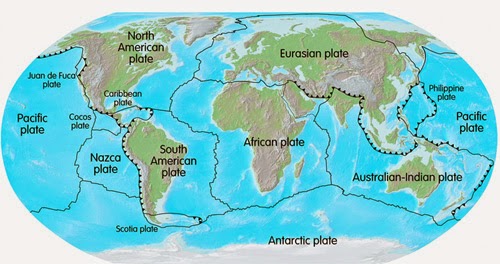
      The phrase "Theories are malleable, but not infinitely so" resonated with me. We know plate tectonics is essentially the way features on the earth's surface are formed, but it is the constant refining and sculpting with more and more data that makes the theory malleable and testable (since Alfred Wegner proposed it in 1939). The defining characteristic of all scientific knowledge, including theories, is the ability to make falsifiable or testable predictions (as we've discussed earlier).


       "The fact that science never really proves anything, but simply creates more and more reliable and comprehensive theories of the world that nevertheless are always subject to update and improvement, is one of the key aspects of why science is so successful." We don't really "prove" things. We refine, bolster, add to a mountain of evidence. . .but scientific proof is different from that "proof is in the pudding(stone)." We can't taste the fruits of our research and get the "proof" as we can in cooking.

     The hot, steamy cooking of the earth like this Fly Geyser in Nevada, remains part of the theory of plate tectonics. We just can't consume it or prove it:


     Do any of the top ten words resonate with you?

Here's to another great trip around the sun,

Steph (Word Woman)

Wednesday, June 11, 2014

Squaring the Circle: Earth and Moon are 60 million years older than we thought, Dante and Math


     The big buzz (Aldrin) of the day yesterday:

EARTH AND MOON 60 MILLION YEARS OLDER

     Sixty million years, give or take 20 million years is a really big deal. The push to ever older ages for rocks on the earth by these French researchers is quite a statement.


     The discovery of older inclusions of xenon gas in Australian and South African rocks points to a much older earth and moon. 60,000,000 years is a huge deal, even to geologists. Many more years for processes to happen. . .


     And this article about Dante and mathematics is worth a look. The question of "squaring the circle" is at the center of Jones' work:


DANTE'S MATHEMATICS


     The tie in? Besides the great rota of life?

     The look at Dante's poetry from a mathematical perspective points to a time when math/science and poetry/the arts were more intricately linked. My question? How and why did they get so separated? Is it merely the increase of the amount of  information so we "can't" keep both parts intricately linked?

     Looking forward to a Wednesday meeting here.  As always, I appreciate your wisdom and insight...about science, words, squaring the circle, and any and all tie-ins.

Mid-weekly, tri-angling squaring the circle,

Steph
(aka Word Woman)


MAIZIE MAY 


Tuesday, June 3, 2014

Leaping Lizards: Saltation vs. Saltation: Jumping Grains vs. "Hopeful Monsters"

     A Smith friend (thanks, Dot!) sent this link to a University of California at Berkeley page which draws a timeline of evolutionary thought in a clear, spatial manner:


     For live links, see the page below:


    TIMELINE OF EVOLUTIONARY THOUGHT


     The graphic is particularly intriguing because it includes both biologists and geologists.

     The scientists are essentially grouped as non-Darwinians, Darwinians, and neo-Darwinians. And who doesn't enjoy a good Galapagos tortoise photograph:


      The branch which caught my attention was the "Hopeful Monsters" tied to Richard Goldschmidt. (Of course, this branch is still under construction at the Berkeley site)...But, the connection between "Hopeful Monsters" or saltation in evolutionary biology to saltation in geology was too enticing to pass up. Saltation is the jumping over quickly from one creature a la macromutations (in biology) or one grain (in geology) to another. Fast evolution, fast geologic change vs slow evolution, slow gradual geologic change.


     In general, both evolutionary biology and geology tend to change slowly over many generations or years. But there are times, as in the Scablands of Eastern Washington, where floods have occurred over a short time period (55 years at a time over a total of 2000 years) creating a landscape that changed relatively quickly:


      As to "Hopeful Monsters," relatively rapid changes due to macromutations were proposed by Goldschmidt in 1940. Many neo-Darwinians dismissed his ideas, however.
      
      On the subject of Goldschmidt, Donald Prothero in his book Evolution: What the Fossils Say and Why It Matters (2007) wrote:

"The past twenty years have vindicated Goldschmidt to some degree. With the discovery of the importance of regulatory genes, we realize that he was ahead of his time in focusing on the importance of a few genes controlling big changes in the organisms, not small-scales changes in the entire genome as neo-Darwinians thought. In addition, the hopeful monster problem is not so insurmountable after all. Embryology has shown that if you affect an entire population of developing embryos with a stress (such as a heat shock) it can cause many embryos to go through the same new pathway of embryonic development, and then they all become hopeful monsters when they reach reproductive age."

       A paper by Page et al in 2010, showed that the Mexican axolotl (Ambystoma mexicanum) could be classified as a hopeful monster as it exhibits an adaptive and derived mode of development that has evolved rapidly and independently among tiger salamanders. 

     In both biology and geology, periods of rapid change make sense.

      (It is unfortunate that some creationists have taken the "Hopeful Monsters" theory as meaning there are no transitional fossils and that "punctuated equilibrium" translates to no evolution. Punctuated Equilibrium is not the same thing as "Hopeful Monsters.")


     Leaping lizards! That's a pretty hopeful looking monster.

With all good things saltational and not, I look forward to your thoughts,

Steph
(aka Word Woman)


Tuesday, May 27, 2014

Trilobite Eyes, Pixels, Surgery, and your Smart Phone

      Trilobite compound eyes have always intrigued me. The calcium carbonate of the eyes of these Paleozoic-aged marine arthropods (similar to those of horseshoe crabs and insects) are often well-preserved:


     These extinct creatures have a three-lobed body:


     Their eyes contain many individual lenses (akin to each one creating a pixel) 


unlike those of humans, which is a useful adaptation used in laparoscopy and which may be used in Smart Phones, if/when the technology gets small enough:


Surgery, Smart Phones, and Compound Eyes


     Compound eyes are especially useful in low light situations and in order to be able to see 360 ° to be aware of predators:


     Experience seeing like an insect (it's NOT what you think)


      A recent paper describes discovery of the not-usually-fossilized soft parts of the trilobite eyes as flower like:


          Discovery of trilobite eye soft parts


     I think it might make me see a little buggy though.


     To end today: Tri a lo' bite of this quote: 


     "I cannot stress often enough that what science is all about is not proving things to be true but proving them to be false." -Lawrence M. Krauss, theoretical physicist (b. 1954) 


What do you think?


Steph

(aka Word Woman)


Tuesday, May 20, 2014

E-femur-al Find: Largest Dinosaur Bone Discovered in Argentina

    The discovery of the largest dinosaur bone in Argentina is the source of an e-femur-al delight today. It is nearly 8 feet long! The dinosaur, as yet unnamed, belongs to the class of dinosaurs called titanosaurs, due to their large size:


      The bones were discovered 160 km from Trelew, Patagonia, Argentina:


     Here are a couple of links to the announcement from earlier this week:

Titanosaur Femur Found--7.9 feet long

Patagonian Dinosaur Bones Found


     These vegetarian dinosaurs weighed as much as 14 full grown elephants. That's a lot of plants consumed. They lived during the Cretaceous Period, about 95 m. y. ago, represented below:


     What would you name the new species of dinosaur? Here's a link to the names of other Patagonian dinosaurs for inspiration:

             Patagonian Dinosaurs

Can you top Piatnitzkysaurus Floresi?

E-femur-ally,

Word Woman (Scientific Steph)

Bonus random-dot stereogram or autostereogram: What animal do you see?


Bonus opalized wood:


Bonus Australian Opal


        Hmmmm, maybe a week on opals may be in our future, o pals ;-).

Tuesday, May 13, 2014

H2O, H2O, Everywhere: "Unstoppable" Glaciers and "Produced" Water

    Water, water everywhere...


                      Photo credit: M. Ruegels

     Too much, not enough, contaminated with salt and hydrocarbon extraction/fracking chemicals: water and the words associated with H2O have been spun this week, especially in two articles.
   
      The "unstoppable" movement of glaciers into the sea in western Antarctica was documented in a NASA press release yesterday:


      This NASA/JPL photo shows the Amundsen Sea on the western side of Antarctica:


        The principal researcher, Eric Rignot, spoke of unstoppable, inevitable, and irreversible processes associated with the glaciers noting that a sea level rise of 1.2 meters is eventually inevitable, yet unstoppable is the term being used in most of the day's publicity. Unstoppable is a more active adjective than irreversible or inevitable--it exudes movement.


          "Produced water" is another science spin term used locally by Colorado Public Radio (CPR) to describe water produced together with hydrocarbons:

           
            "PRODUCED WATER"

     This positively spun term denotes what's leftover after extracting hydrocarbons--water with benzene, toluene, salt, etc. which, according to the article, is responsible for tuberculosis in cattle. "Unstoppable glaciers" is a reasonable term; produced water is not. Even "connate water" is not, since, by definition, it is the water originally deposited with the rock.

       The CPR article refers to the original salt deposited with the rocks as part of the produced water or flowback and downplays the chemicals added in hydrocarbon extraction/fracking. Produced water--really?

        Just hiked past some (quite cold) springs here in the Colorado hills. Now, those are "produced," unstoppably crystal clear waters!

Turn, turn, turn, turn,
Spin, spin, spin, spin,

Looking forward to your liquid thoughts,

Word Woman (aka Scientific Steph)

P.S. More Water. . .

        Great morning with Al (Aluminum) and the kindergarteners today. We made boats from Aluminum foil and determined the best structure for piling on pennies til the boats sank. 

        They know H2O, CO2, NaCl, O2 and now Al. Big leap today as I asked them the chemical formula for ice. After a few guesses of I, they came round to H2O. 

        "Ok, how about steam?" 

         "H2O!" 

          It was quite a moment ;-).


Tuesday, May 6, 2014

Fast and Slow Rates of Tectonic Change: New Zealand and Arizona

     I received an alert from The New York Times today with this "breaking news" about climate change. Temperatures rising slightly less than 2 ° F are certainly cause for concern but, for most scientists it is hardly breaking news. The data are important, though, especially the possible projected rise in mean temperatures by up to 10 °F by the end of this century:

        CLIMATE CHANGE REPORT

    As a focus today, I'd like to compare the relatively quickly-changing tectonic geomorphology of New Zealand to the much slower-changing tectonic geomorphology of Arizona.
Tectonic geomorphology involves the interplay of surface features with underlying tectonics.

     In this geologic map of New Zealand, rates of up to 5 mm uplift per year are noted in red:


      Areas of rapid uplift are marked by active faults, seismic activity, waterfalls, and newly developing stream systems:


     New Zealand sits at the junction of the Australian and New Zealand tectonic plates and displays the features of a rapid convergent plate tectonic zone.

      In contrast, Arizona sits within the North American plate, rather than at the convergence of two plates. The fluvial (river) geomorphology is well developed and integrated. The landscape has had long periods of time to adjust to ancient fault scarps creating well-developed alluvial fans:


     One of the most interesting parts of tectonic geomorphology to me is that features like alluvial fans may also mark places of more rapid uplift, where the alluvium is adjusting to more active uplift as in here in Iran:


     But, back to climate change (you knew I'd get back there, right?), the increased overall temperatures, torrential downpours, and periods of drought are all intimately connected to this skin of our earth. The climate we are changing will inevitably affect the tectonic geomorohology as landscapes adjust to the wide swings in temperature and rainfall.

      Looking forward to your thoughts on this interplay of climate and tectonic geomorphology, all you alluvial fans!

Tectonically,

Word Woman (aka Scientific Steph)


P.S.

Mid May in the Colorado Mountains:


Tuesday, April 29, 2014

Llareta in the Andes, Corn in Kaua'i, and GMOs: Slow Versus Fast Growth


     Llareta is the extremely slow-growing evergreen plant featured on yesterday's NPR Science Friday blog:


     Yes, llareta is real. The photo above is not a poorly photoshopped creation (for you bloggers resizing and reshaping your images ;-)). Azorella compacta is a perennial evergreen and grows close to rocks or soil in order to conserve heat at elevations of 14,000 to over 17,000 feet. Llareta is related to parsley and is quite slow-growing, adding only 1-1.5 centimeters per year. Some of these dense mats of llareta in the Andes Mountains of Chile, Peru, and Argentina have been carbon-dated as being over 3,000 years old. [Alternate carbon-dating definition: chemists getting together for dinner and a movie.]


     The complete article about these dense mats that have, unfortunately, been used in South America as non-renewable fuel is linked here:


               LLARETA OR YARETA


     In comparison, the fast-growing, 3-crop-per-year corn crop in Kaua'i, Hawaii, takes a mere 3-4 months for the entire life cycle. The genetically modified organisms (or GMOs) are pushed to a level of ever-faster change in growth so that modifications to the corn seeds can be made in just 3 years (or, by some accounts, 7 years) instead of at least 13 years in a one-crop-per-year acrigulture. In any case, it's rapid, push it out to market food. In between every corn cycle, the fields are sprayed with Roundup herbicide which kills every broadleaf. Seed agriculture is now Hawaii's number one agricultural business, ahead of cane sugar, pineapples, and other native plants.


     More on GMOs here from earlier this month (the photo credit is in the link below):

GMO Seed Agriculture Growth in Hawaii

     Slow-growing, ancient organisms that have been around for thousands of years or fast-growing corn that has been genetically modified every few months, treated with three rounds a year of Roundup? Which seems safer for animals, including humans, to be around or, in the case of the corn, to actually eat?

       This week's blog honors my mom, June, who has been active in getting people to understand what corporations like Monsanto and its product, Roundup, in their GMO research, are doing with our food. (Over 90 % of U.S. corn is now a GMO product).

        Her best suggestion for us? Plant our own gardens!

         And a final, favorite photo of another very old friend, the bristlecone pine (nearly 5,000 years of very slow growth in CA and other high elevations):


Looking forward to hearing your thoughts on the slow and the fast, the unchanged and the modified, llareta and GMOs (I can wait...),

Word Woman (aka Scientific Steph)


Tuesday, April 22, 2014

Tortoises, Putnisite, John Cleese, and Better Creativity Tools, According to SCIENCE!


     This week I'd like to start with an article about creativity and writing which is, according to the Fast Company title, backed up by science! It includes tortoises and John Cleese video (With this Monty Python crowd, I imagine "according to Cleese!" may have the same effect as according to Science!)


Here's the link to the full article based on SCIENCE:

          Creativity according to SCIENCE

     Science was the top word Googled, ahem, researched, on the Merriam Webster website last year:

             Top word of 2013 is science

       I imagine editors are happy to see science thrown into a title whenever possible. A quick scan of the Fast Company homepage shows 4 articles containing "according to Science" on the main page. Do not get me wrong, I am happy to see science getting so much press. Although, at times, it seems thrown in a bit gratuitously.(Gratuitous throwing is a real thing in Ultimate Frisbee, a favorite sport for my son, his friends, and dogs):


[The frisbee player and dog in the photo are not related to me though;-)]

      Back to the article...The usual things that help creativity like exercise, sleep, moving on to something else and coming back after a percolation period are well-known, even not according to science. Writing with pen and paper has always been a creative juicer for me...There is something about the physical act of making the letters that a keyboard does not do. And now, I know, according to science, it works. . .

      Mr. Cleese notes that creativity is like a tortoise in that it pokes its head out gingerly to see if it is safe to stay out.


      He speaks of writing a funny sketch, losing the paper it was written on, and then recreating it from memory. When Mr. Cleese found the old sketch, he realized the newer one was much funnier.


      I am going to set this post aside for awhile and see how that percolating works.

      Percolating results:

     Popular Science is an oxymoron these days.

     Gilda Radnor's quote about creativity percolated through: "I can always be distracted by love, but eventually I get horny for my creativity."


      Hope you are having a wonderful Earth Day enjoying science and creativity.

Scientifically!,

Word Woman (Scientific Steph)

Newsflash: Putnisite, a new, soft mineral with an interesting composition has been discovered in Western Australia


Here's the source article from Science News:

                        PUTNISITE


Tuesday, April 15, 2014

Blood Oranges, Crustaceans, and the Moon

 
     Wow! The lunar eclipse last night was amazing. The moon was the color of a blood orange for quite awhile after the eclipse:


     It was worth awakening for, except I am pretty tired today. I hope you were able to look up from your phone, computer, or tablet to see it:


     So, this segue to a 520-million-year-old crustacean with preserved cardiovascular, nervous, and digestive systems found in China may not be the smoothest, but it will be color-coordinated ;-). 

      [One of my favorite memories is of shopping with my four-year-old son. He noticed that everything in our grocery cart was orange when we started shopping.  He suggested we only buy orange things that day. Totally impractical but totally fun! We came home with orange popsicles, pumpkins, carrots, yams, oranges, and other assorted orange things. It was worth needing to go back the next day to get other essentials ;-)].

     In what researchers from the University of Arizona, UK, and China are calling an "invertebrate version of Pompeii," evidence of an especially well-developed cardiovascular system in a three-inch crustacean named Fuxianhuia was discovered in Yunnan Province, China. The system is outlined in carbon and surrounded by mineralized deposits.


         The computer generated model above shows the heart and blood vessels in red, brain and nervous system in dark blue, and digestive system in teal. (Image credit: Nicholas Strausfeld). Eyes and antennae were also preserved.


           The depositional environment is a bit unclear in these half-billion-year-old deposits. The fine dust-like particles are referred to as mudstone with a possible connection to a tsunami (so the volcanic Pompeii analogy doesn't quite work for me.)

             The article was published on April 7, 2014 in Nature Communications:


             And, yes, one more orange-red thing, for geologic-times sake (This is a crawdad, not a lobstah. . .)


      Looking forward to your lunar eclipse, crusty crustacean, and other comments this April Tuesday.

Orangely,

Word Woman (Scientific Steph)

Updated P.S.: Natural dyes for eggs made with turmeric, beets, and red cabbage. Kindergarteners and I had a colorful day.


     Look what I found this morning at our grocery store, prominently featured in a large display at the front of the store! They do have a wonderful blend of sweet and tart, jan. Someone had placed a shinier, less wrinkled, similar-shaped orange variety on top of the Sumos. I was not swayed. Thanks for the recommendation.